LILLIAN DAVIES ON JASMINA CIBIC

Jasmina Cibic, The Gift (still), 2021, three channel 4K video. Courtesy the artist
Afterimage by Lillian Davies:
In the early 1950s Stalin erected the Palace of Culture and Science in the center of Warsaw as a gift to the Polish people, newly part of his Soviet Union. There’s an Olympic-sized swimming pool inside the 42-floor tower, with a diving well and three platform boards. Jasmina Cibic’s three channel 4K video film, The Gift (2021) opens there, with sweeping color images and sounds of chlorinated water trickling through the drains. In her opening shots, three pre-adolescent girls, hair pulled back tight from their pale foreheads, walk one after another along the pool’s tiled edge. They are dressed to perform and to compete, wearing simple one-piece suits, two in navy blue, one in dark red. A stately piano melody and a cool female voice over accompanies them as they climb metal stairs and await one another at the top of the diving platforms. A dive, a front flip, and a pencil shaped plunge, the athletes pierce the calm surface of the crystal-clear water, finger tips first, or toes, at exactly the same moment, amplifying the cutting sound of a splash. Exuding youth, strength and beauty, like Zeus’s three muses, these young women embody ideals that are beyond themselves. Cibic filmed underwater, and seen from below, the moment they break the surface is like the burst of a firecracker, or three. For a split second after their plunge, they are unique, liberated, swimming slowly to the surface and an inevitable panel of judges.
Cibic’s newest film, unfolds primarily in Paris, inside the French Communist Party Headquarters, a gift from architect Oscar Niemeyer. Here, Cibic’s three male characters, “three gifts,” as she calls them, The Engineer, The Diplomat, and the most handsome, The Artist, played by Downtown Abbey’s Lachlan Nieboer, devise a plan: “We will organize a competition to determine the symbol of our renovated future.” And so it is, that each, speaking in turn of the ideological virtues of architecture, music and art, are put into competition to determine the gift that will appease and reunify an unnamed and divided nation.

Four actresses play a cast of allegorical judges, referred to in Cibic’s narrative as the Four Fundamental Freedoms: from Fear, from Want, of Speech and of Worship (terms borrowed from Franklin Delano Roosevelt’s 1941 speech aimed to spur American support for entry into World War II). The characters’ dramatic period hair, makeup and clothes — perfectly matched to Niemeyer’s 1971 construction date — are a contrast to the unadorned sobriety of Cibic’s three divers. Cibic’s judges’ polish and dress are reminders of the workings and power of spectacle, performances of gender, seduction and status, that fuel political debate and public opinion. The judges’ exchange begins as a sort of philosophical debate and quickly disintegrates into a battle of practical nonsense—jargon.
It’s a jargon that sounds like art-speak or International Art English, as named in the brilliant Triple Canopy study, that eerily familiar language drained of meaning through translation, repetition and misunderstanding. Each line of Cibic’s script is ready-made, like her characters and soundtrack for this film, pulled from archives, transcriptions and recordings of politicians and artists speaking about the ideologies behind modern artworks:
“Art itself if a gift of the creative spirit.”
“The artist is a political being: alert.”
“Art is not made to decorate apartments. It is a weapon to be used against the enemy.”
Not only historical ready-mades, each element—script, music and sites—of Cibic’s The Gift was given as such. MAC Lyon curator Mathieu Lelièvre Lelièvre cites the French social anthropologist Marcel Mauss whose 1924 essay remains preeminent for studies of gift exchange. For Mauss, gift giving implies a social contract performed in public rituals. There’s a stage, costuming and choreography that Cibic forces us to see. Gift-giving can be a tool of soft power, a political and cultural phenomena she’s been exploring since her exhibition for the Slovenian pavilion at the Venice Biennale in 2013.
Joseph Nye coined the term “soft power” in 1990, shortly the fall of the Berlin Wall. For Nye, soft power implies “organizing an international agenda and structuring world politics by using resources of intangible power like culture, ideology and institutions.” Mobilizing art for political ends in other words, though sociologist Alexandre Kazerouni warns, in his recent paper, Musées and Soft Power in the Persian Gulf (2015), that Nye’s soft power is not economic power. It is the intellectual and ideological conception of an artwork that matters, not its market value.

Jasmina Cibic, The Gift (still), 2021, three channel 4K video. Courtesy the artist.
Though Cibic doesn’t mention him by name, Lewis Hyde’s eponymous book, first published in 1983, looms large. Hyde wrote as a poet, for other poets, searching for a history and meaning of gift giving, gift having, in a modern society founded on commercial exchange. His subtitle, How the Creative Spirit Transforms the World, reads like a line of Cibic’s ready-made script. As Margaret Atwood wrote recently in Paris Review, in his book, Hyde seems to be looking for a definition of the nature of art. “Is a work of art a commodity with a money value, to be bought and sold like a potato, or is it a gift on which no real price can be placed, to be freely exchanged?” Atwood asks. She proposes an answer in Hyde’s explorations, perhaps in her own work, something also glimpsed in Cibic’s cinematic ruminations: “Gifts transform the soul in ways that simple commodities cannot.” Stalin may have demanded the labor of ten thousand men to build his palace, but there is freedom in the water, in swimming under the surface. It’s Cibic’s triptych image of her divers’ splash, a sort of momentary escape, that stays in my mind, like a gift.
NINA STRAND ON LOUISE BOURGEOIS

Louise Bourgeois, Cell XXV (The View of the World of the Jealous Wife), 2001. © The Easton Foundation/VAGA at ARS, NY and DACS, London 2021. Photo: Christopher Burke. Shown at Whitechapel Gallery.
Afterimage by Nina Strand:
Louise Bourgeois, who called herself a prisoner of her memories, was three years old when the First World War began, and moved from France to New York two years before the Second. She began to make her self-enclosed structures known as the Cells in 1989. The objects collected within them, which one can only view from the outside, all had a personal resonance and history: ‘Each “Cell” deals with the pleasure of the voyeur’, said Bougeois in 1991, ‘the thrill of looking and being looked at. The “Cells” either attract or repulse each other. There is this urge to integrate, merge, or disintegrate.’
Her work has been on my mind a great deal during the last two weeks. The day Putin decided to begin a war against Ukraine, I visited two exhibitions in London where one could see her cells: The Woven Child, at Hayward Gallery and A Century of the Artist’s Studio: 1920–2020 at the Whitechapel Gallery. The first is a retrospective with a focus exclusively on Bourgeois’ work using fabrics and textiles. The second is a survey of the studio through the work of over 80 artists. Featuring Bourgeois alongside contemporary artists such as Walead Beshty, Lisa Brice, Paul Mpagi Sepuya and Mequitta Ahuja, the exhibition gives a peak into how an artist works. This grand survey also demonstrates how artists can and do make a change for the better in society, making one question whether an international ban on Russian artists is the right approach to take, especially since Putin himself silences those who speak against him.
Today we live in a state of constant crisis, with conflicts being waged all over the world, millions of displaced refugees, and the aftermath of the pandemic. With this in mind, Bourgeois’ microcosms, described by Okwui Enwezor as works that ‘turn life inside out’, have extra resonance. The 'Cells' represent different types of pain, Bourgeois has explained: ‘The physical, the emotional and psychological, and the mental and intellectual. When does the emotional become physical? When does the physical become emotional? It's a circle going round and round.’
SHAHRZAD MALEKIAN
This is my pop-up sculpture and installation in public spaces. It operates at the intersection of the natural and the human-made. Plants, moss and fungi become entangled with the body of the sculpture and creating a continuously evolving and living sculptural form. For me, this is a perfect symbol for the current situation which is happening around the world, and my contribution to this series. I want to remind the audience of the urgency of rethinking our relationship with non-human forms of living.

NINA STRAND ON MOHAMED BOUROUISSA
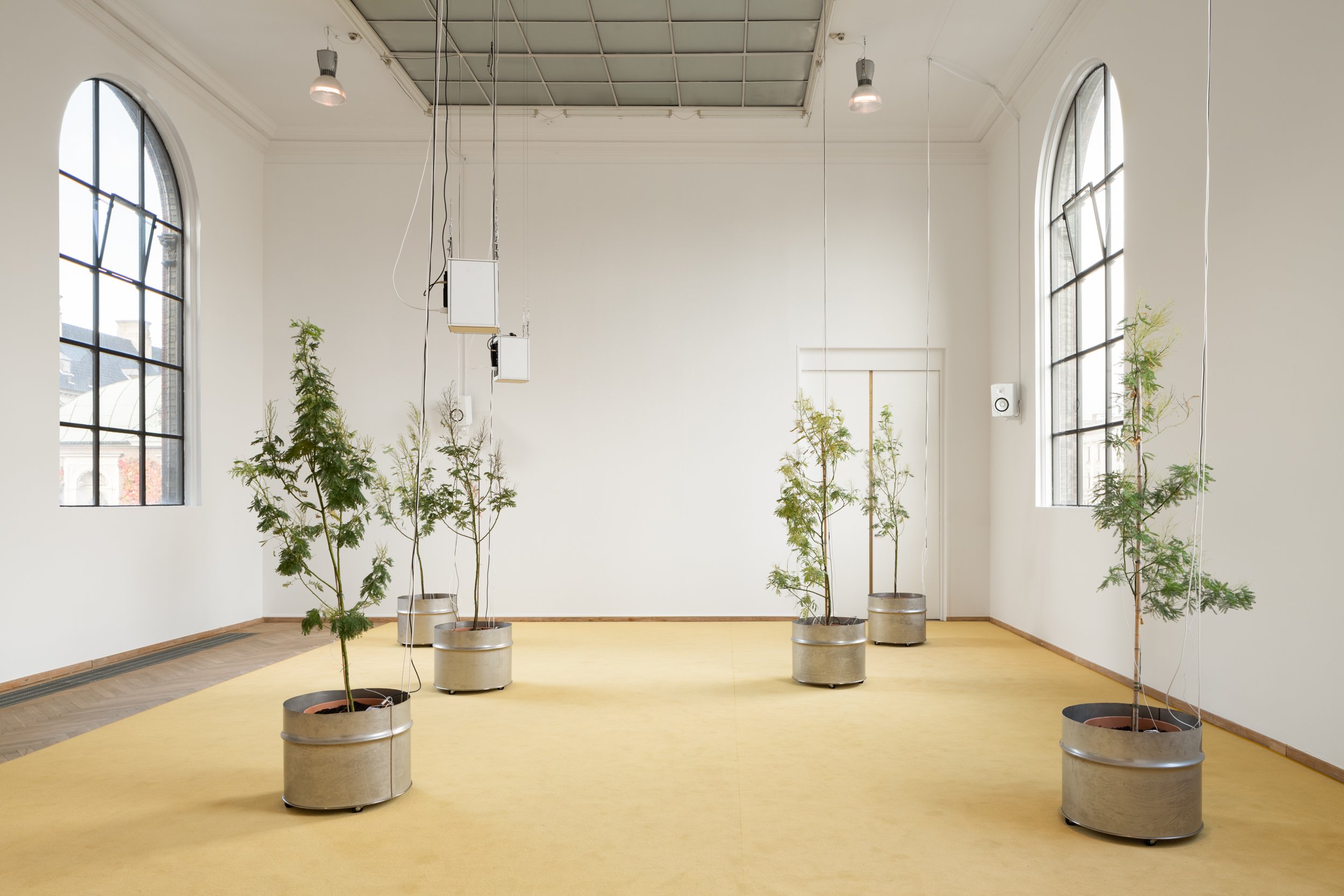
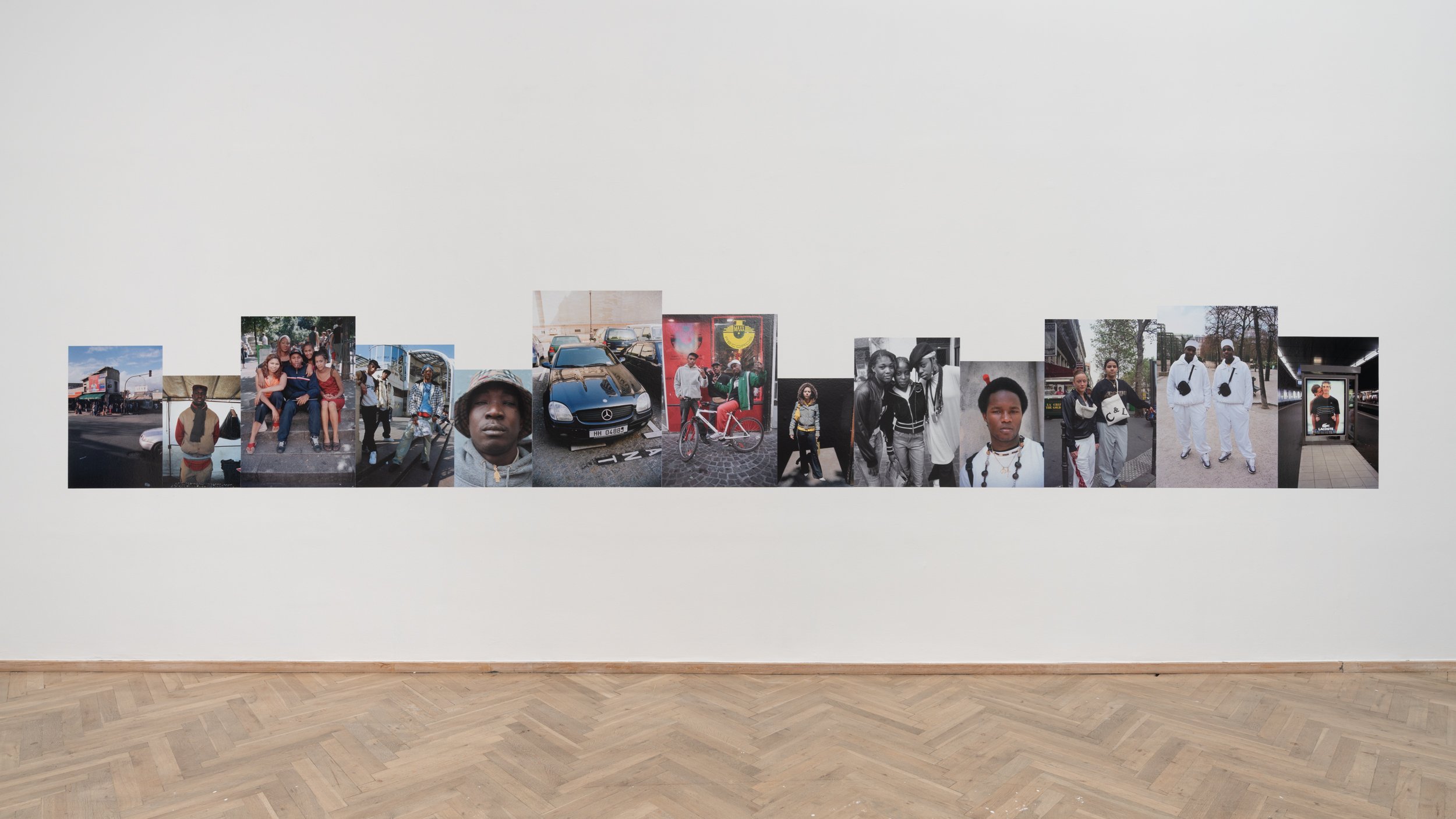
Afterimage by Nina Strand:
The couple in the café next to me are either on their first date or their last. It’s difficult to know if they’re shy or bored with each other. They’ve been discussing a friend. I’m hoping he’ll never hear their opinions on how sadly he leads his life. I’m on time and happy for the entertainment these two bring while I wait. My friend arrives late. I still suggest we have a glass wine before we go in, it’s been so long. But he’s in a rush and so I quickly gather my things. He doesn’t look me in the eye.
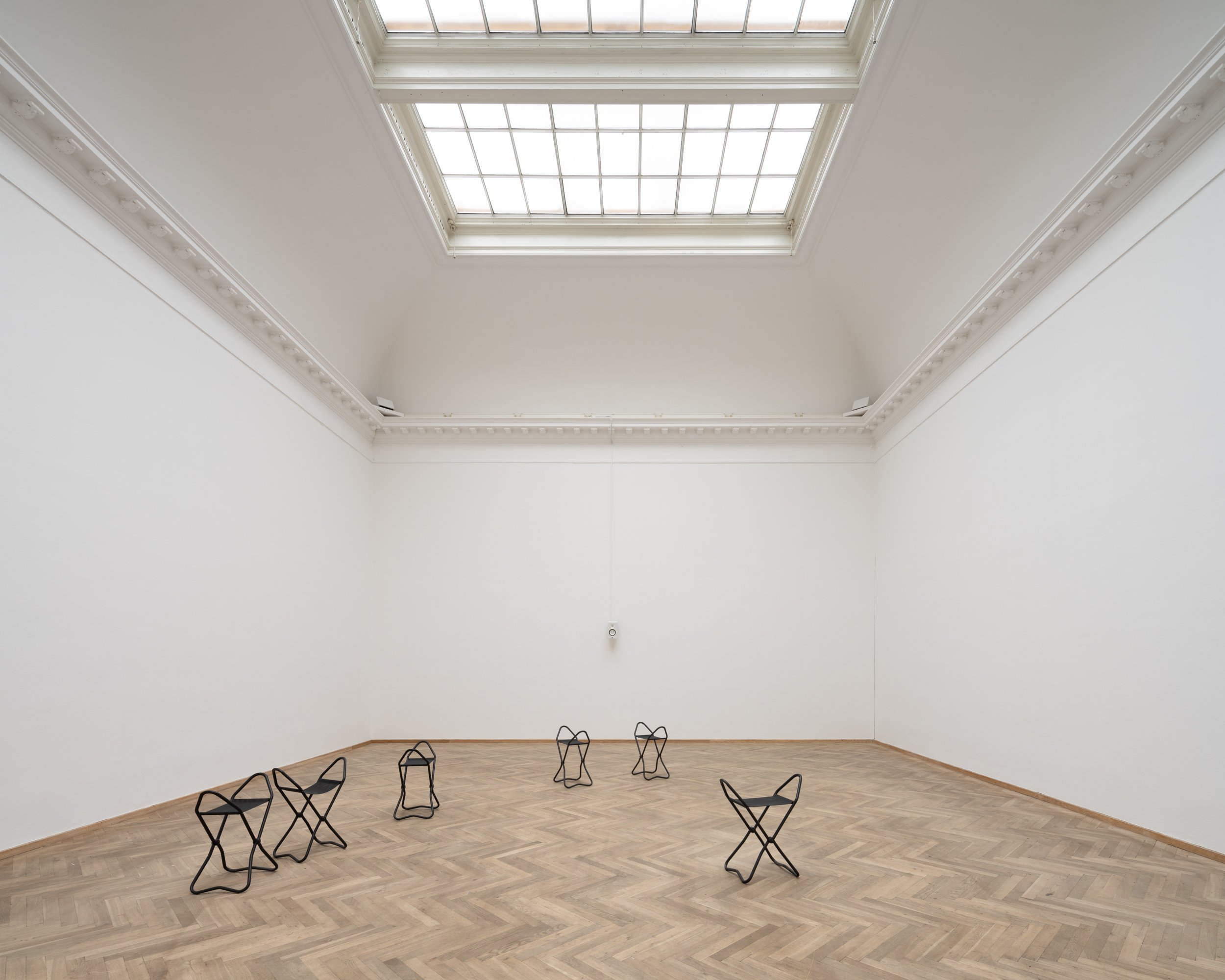
We begin in a sky-lit room that contains only some speakers and small chairs to sit on. Everything is white. Everywhere is sound. Many voices are shouting the word ‘hara’, used by young people as a warning if the police get too close. I wonder if there’s a warning word I can shout to myself about a friend acting weirdly. The thing is, I didn’t really have time for this exhibition visit. This was his idea. ‘All I do is try to keep it together’, I say to him, or to his hair; his back is turned to me. He looks at the wall text – explaining how the artist uses his work to call attention to young people from ethnic-minority backgrounds – and says one should always compare.
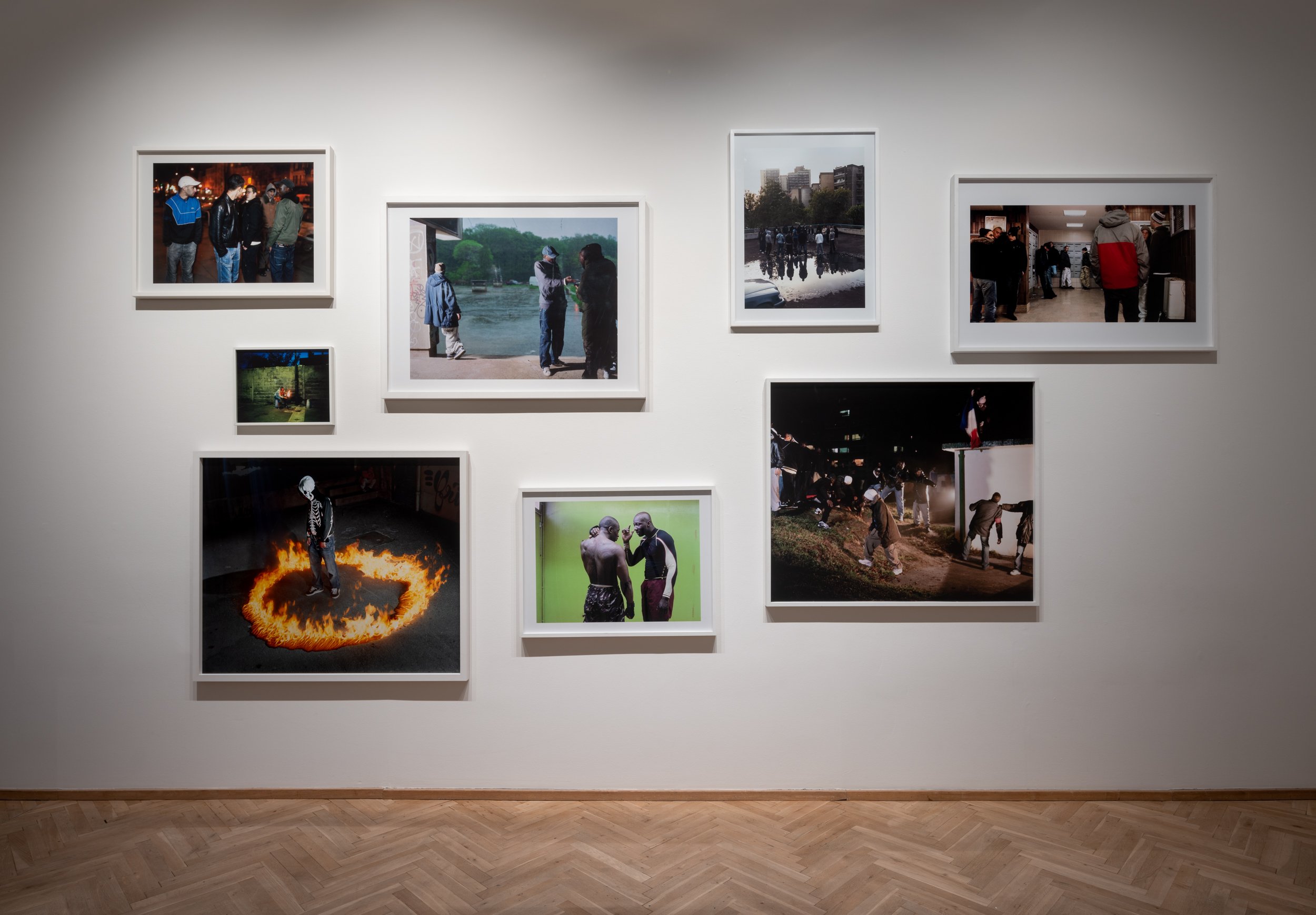
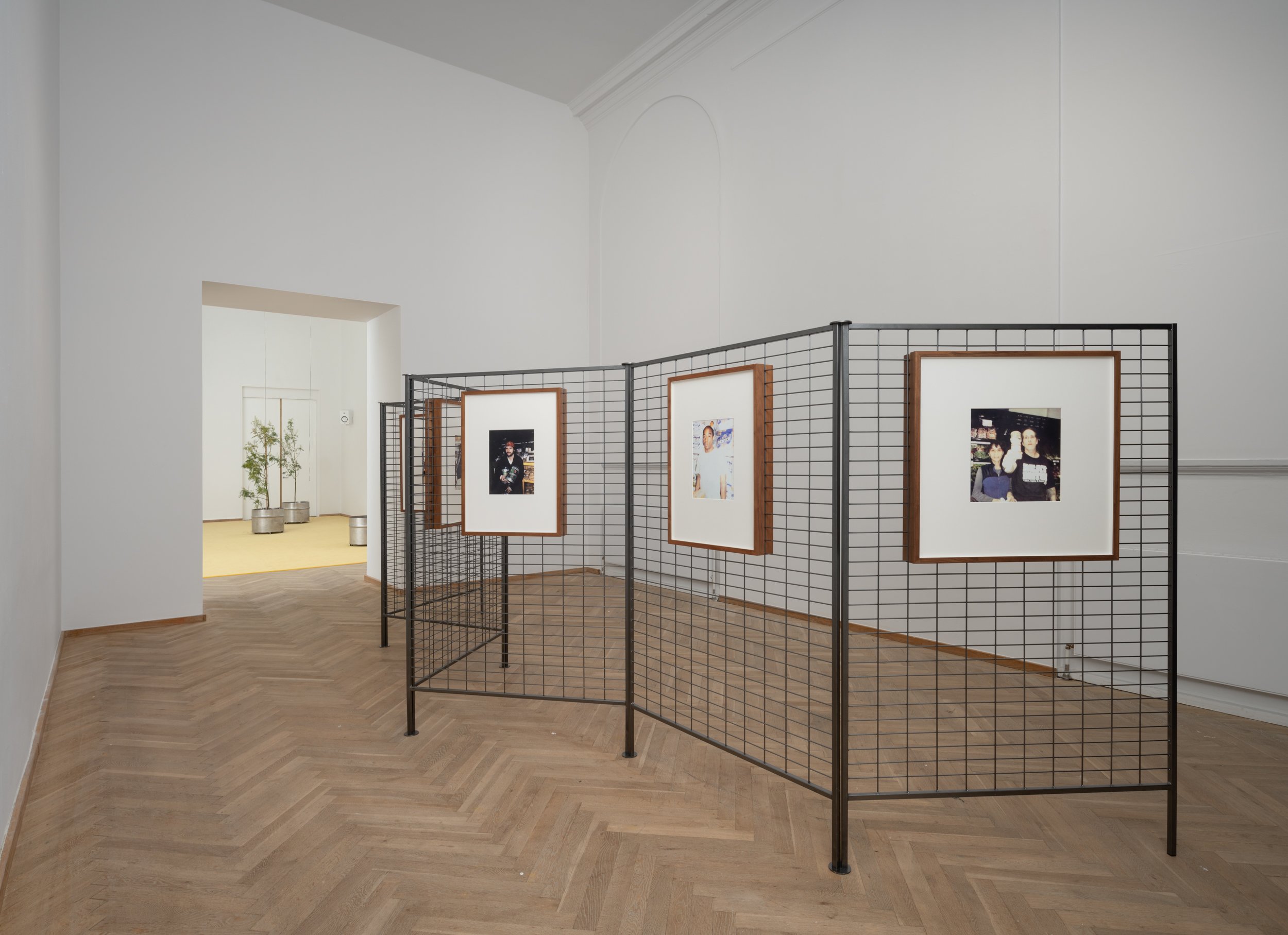
We move further into the exhibition, passing a labyrinthine structure of fences with images of refugees on them. The complicated installation makes perfect sense to me in this tense situation. In the next room, we spend time in front of large photographs hung on only one wall. I am moved by the presence and focus the images acquire when exhibited like this. He says he couldn’t disagree more.
We’ve nothing left to talk about. When we pass a sort of garden planted with very thin trees, they seem embarrassed to be there with us. A man is vacuuming around them, something we’d normally laugh about, but my friend still doesn’t meet my eye. I look at his cap, which is on backwards. Who does he think he’s fooling? It does nothing for his receding hairline.
Does one break up with friends? I wonder if I said something stupid last time we met. This is probably my fault. It usually is. He walks quickly through the final room, which is plastered with too many unframed photographs – too many people’s stories we’ll never hear – and makes his way down the stairs. We usually write a wish and hang it on the Wish Tree placed there, but he doesn’t stop.
If I go back to my studio now, I’ll stew for the rest of the afternoon. I write a wish for his health and hang it on the tree, and go back to the café, hoping the couple is still there.
I can still hear the shouting of ‘hara’ for days afterwards.
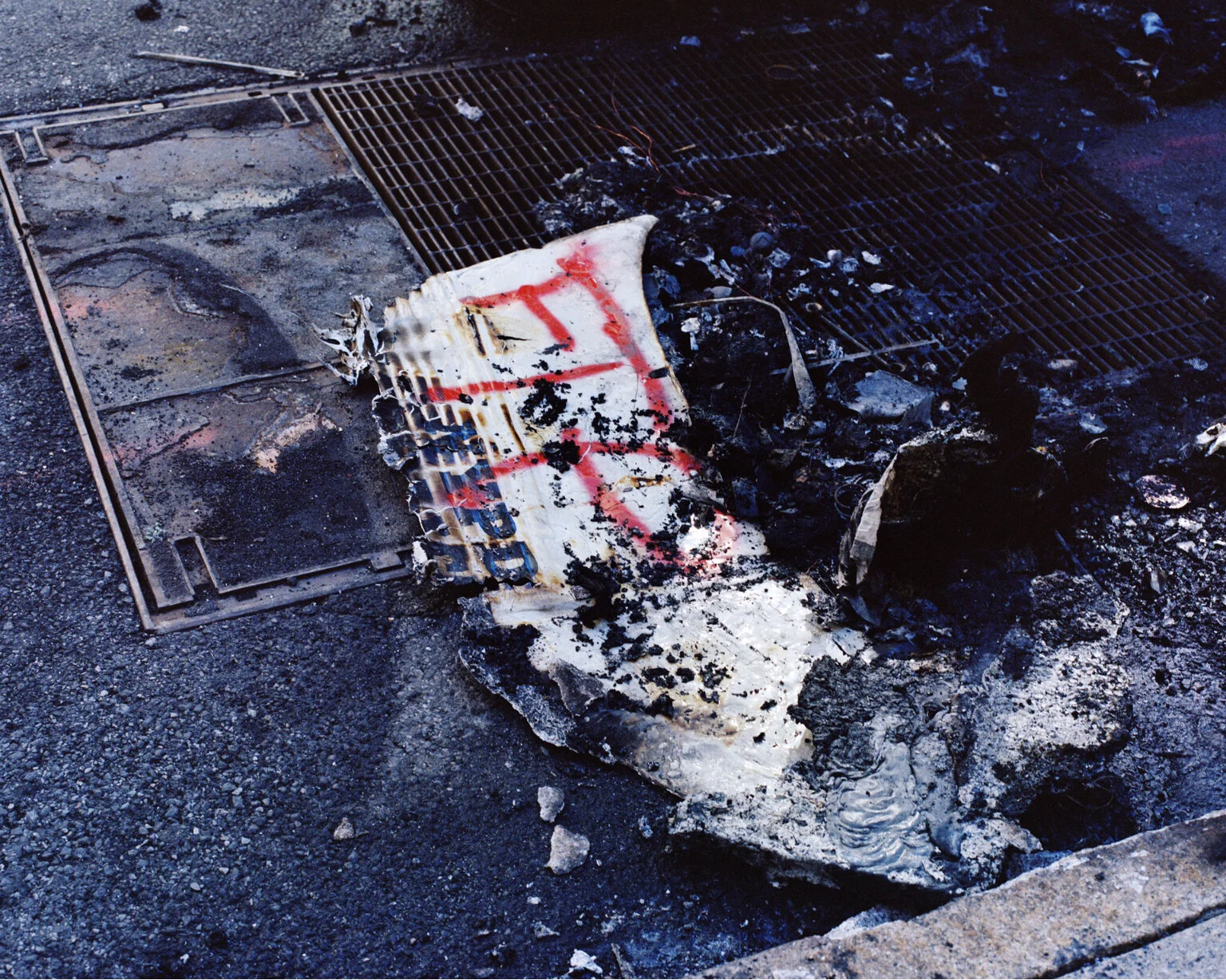
Mohamed Bourouissa: HARa!!!!!!hAaaRAAAAA!!!!!hHAaA!!! Kunsthal Charlottenborg 09 Okt 2021 – 20 Feb 2022. Courtesy the artist, Kamel Mennour and Blum & Poe. Installation photos by David Stjernholm.
NINA STRAND ON HIROSHI SUGIMOTO

Hiroshi Sugimoto, Opticks 008, 2018, courtesy of the artist and Marian Goodman Gallery
Afterimage by Nina Strand:
In a currently closed Paris I saw Hiroshi Sugimoto’s new exhibition at Marian Goodman Gallery, and I spent a long time looking at this beautiful blue work. It was a welcome escape from our lockdown situation.
Sugimoto’s subject matter include lifelike displays in museums of natural history, old American drive-in theaters as well as vast seascapes — as he has investigated time and memory throughout his practice. For him, photography functions as a system for saving memories, it is a time machine.
His current exhibition Theory of Colours at Marian Goodman consists of his new series Opticks. The title of this series is a reference to Sir Isaac Newton’s treatise Opticks, published in 1704. Opticks is according to Sugimoto essentially a series shot using a Polaroid camera, capturing the light that Newton refracted using a prism.
This new body of work is just as meditative as his seascapes. He has previously stated that photography is like a found object. That photographer never makes an actual subject; they just steal the image from the world. But not every photographer has the expertise in finding these ‘found objects’ as Sugimoto.
Known for his precise techniques, long exposures and perfectly composed large format photographs — the philosophical and conceptual aspects of his ouvre is just as important. His photographs reveal the time passing, and the mediums unique ability to render a trace of it.
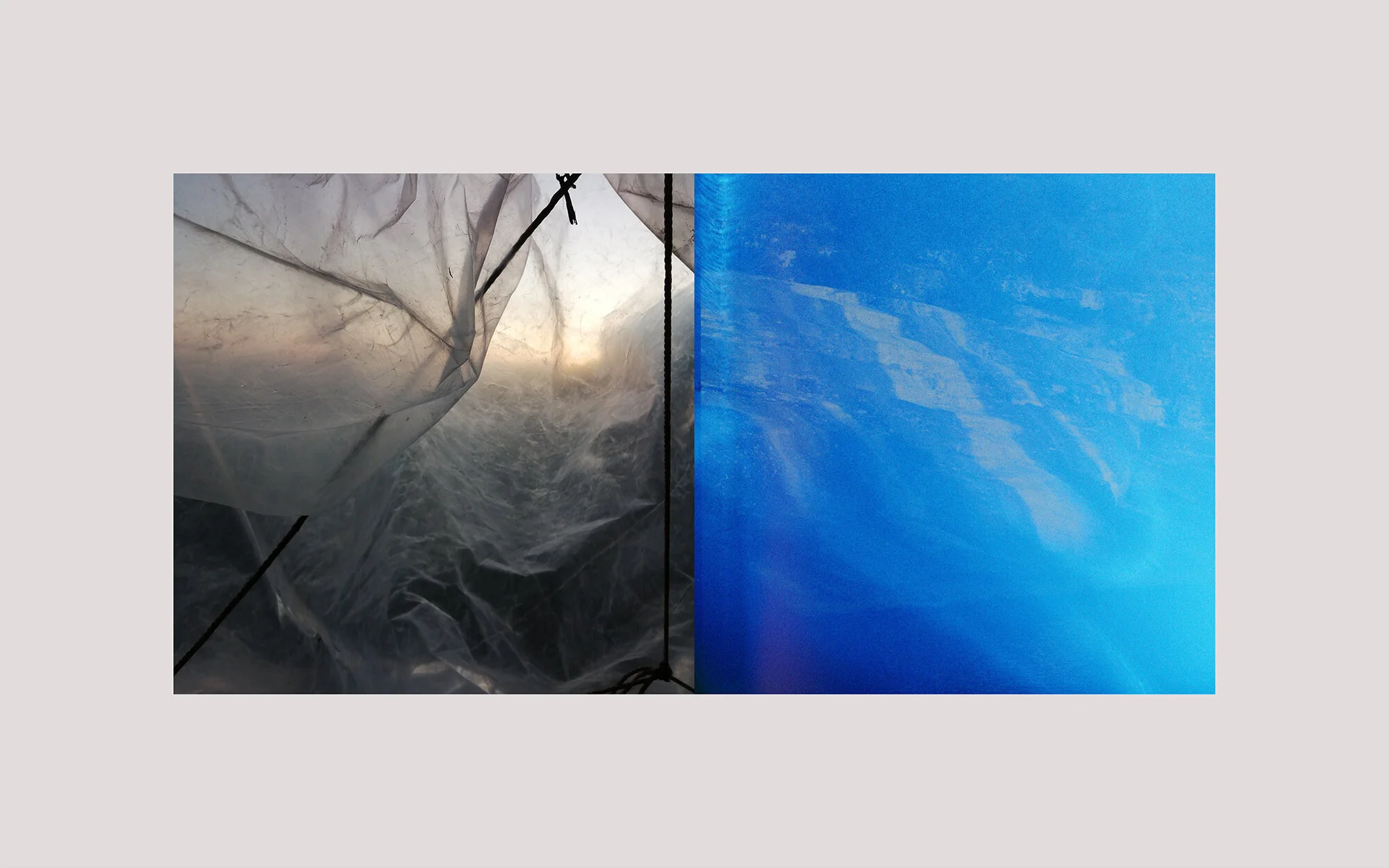
ESSI KAUSALAINEN
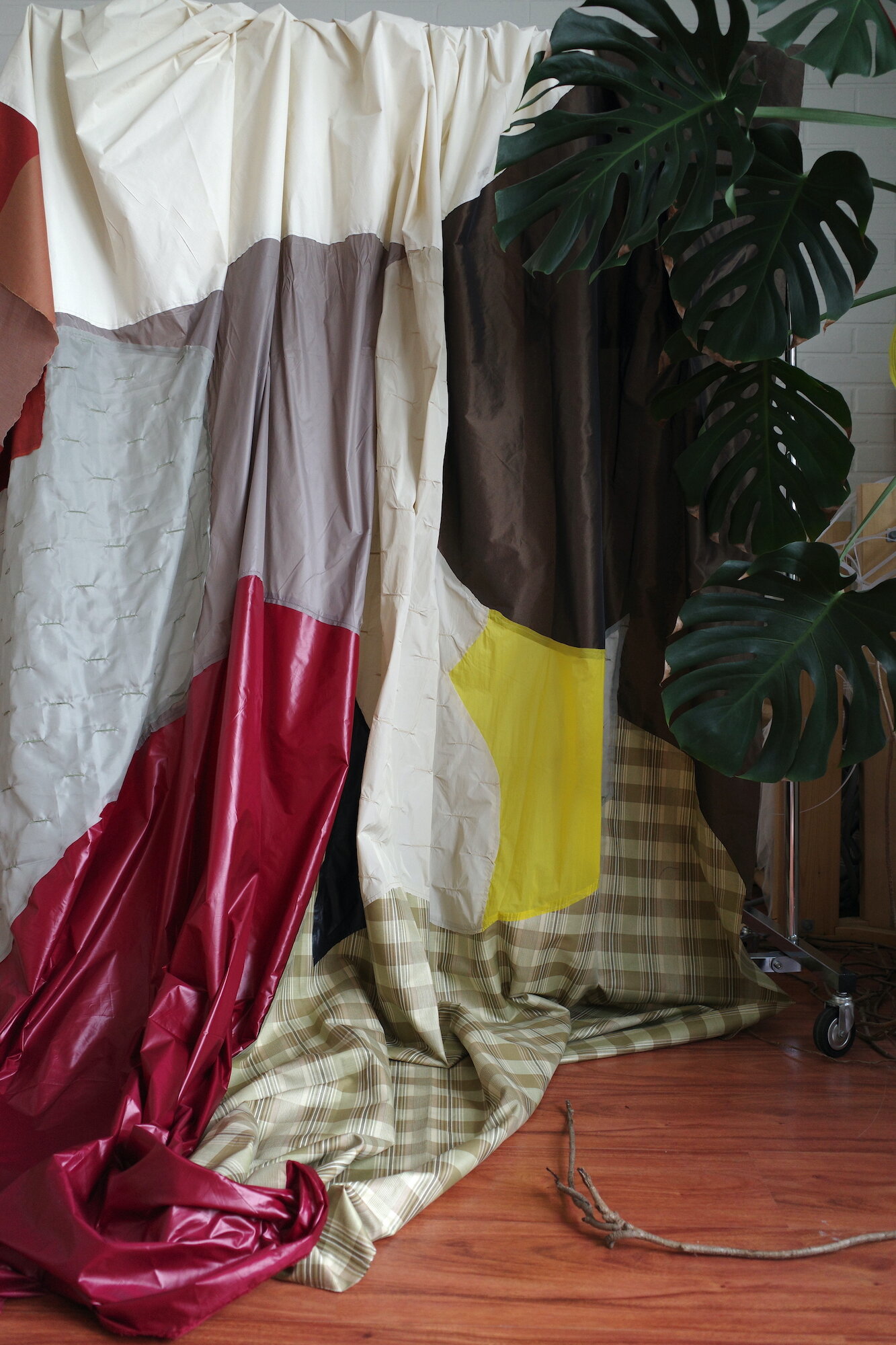
Dear L,
While writing this, the early spring light filters through a thick layer of clouds and bounces from the snow covered roofs. The light is so even there are nearly no shadows visible. Somehow this makes sense with my sense of time, which has gone out of joint. The days are short and long with no apparent logic. They are thick, sticky and viscous, and my attempts to organize them into segments of activity and rest seem to be ridiculed. All the borders grow soft and blurry.
I am filling this uneven time by walking in circles in the suddenly quiet seaside city, orbiting like a moon of an unknown planet. Everything is floating. My body, the time, the language. In my solitude I am knitting new words to tell you how it all resonates in me: the sense of pressure within the bone, the electricity behind the eyes, the opening of the skin in my back that allows the room, the world, to flow through.
In these peculiar settings, I have started to sew. Connecting pieces of fabrics into shapes, into platforms for unknown future events. Most of them are so small and light one can carry them in a pocket. Yet, they are all big enough for two people to stand on, if their bodies are arranged close to each others. I hope one of these days I could orbit to you and hand one over.
With love, E
(This text has not been edited by Objektiv as it is a personal letter.)
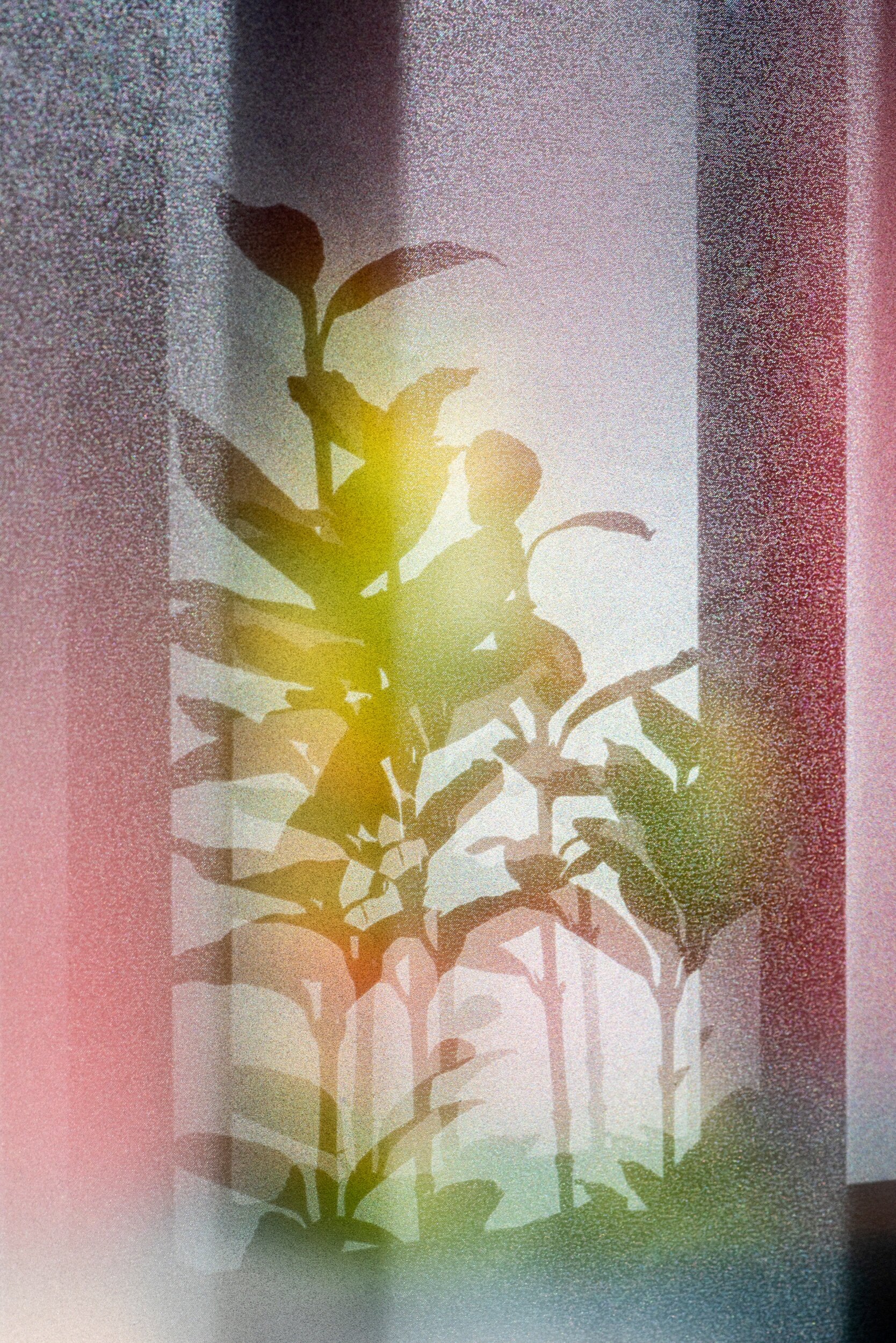
NINA STRAND ON NICOLE EISENMAN, VANESSA BAIRD & LINN PEDERSEN

Nicole Eisenman, Destiny Riding Her Bike, 2020. Photo Thomas Widerberg. Astrup Fearnley Collection.
Afterimage by Nina Strand:
There's no place like home
On a painting, a drawing and a photograph.

Linn Pedersen, Kiddo, 2021.
The large painting Destiny Riding Her Bike by Nicole Eisenman has been on my mind since I saw it at the Astrup Fearnley Museum In Oslo a couple of weeks ago. A woman soars off her bike having crashed into a ladder set up against a tree, toppling a man who is trying to save the small cat that intently watches the chance meeting between the two humans. In the March issue of New Yorker, Eisenman explains the image in the article ‘Every Nicole Eisenman Picture Tells a Story’ by Ian Parker. ‘It’s a romantic painting of two people meeting. One is falling off a ladder, and the other is riding a bicycle into the ladder—and popping off the top of the bicycle. She’s flying through the air. And they kind of have their eyes locked on each other. I think it’s very romantic—a Douglas Sirk film still.’ Eisenman explains that the picture is connected to her recent relationship with the art critic and writer Sarah Nicole Prickett, and that the image became ‘this disaster happening, and a kind of romance inside this disaster’. In these days of isolation, I long to meet new people like this, romance or no romance.
Eisenman has mentioned her admiration for the Norwegian artist Karl Ove Knausgaard, to whose project My Struggle Vanessa Baird’s work has been compared. Baird has just published her new book There's no place like home with autobiographical drawings of living with her kids and her mother. Some drawings are accompanied by notes written by her mother about her different needs, reflections and thoughts. When I once interviewed Baird, she told me she called her drawings for short essays, hoping people could get something out of seeing her work. ‘My everyday life is like everyone else's, it's about recognition.’ This book with her mother certainly seems to depict a struggle, to paraphrase Knausgaard. In one drawing, Baird is sweeping a never-ending dirty floor, with several kids around her, while in a corner her frail mother is lying in a bed. On the top she has written: ‘Stuck in genes and affection.’
Another mother and daughter relationship is evoked in the photograph Kiddo by Linn Pedersen, included in her recently opened exhibition Omland at Golsa in Oslo. The image is the imprint left in the snow after her youngest daughter outside their house in Lofoten. It was dark outside, Pedersen tells me, and she was carrying groceries from the car as she walked past this impression her daughter had made in the snow. It reminded Pedersen of a cherub from a Raphael painting mixed with the Michelin man, an astronaut, and craters in the lunar surface. Many of the images in the exhibition are from the north of Norway, where she has moved back with her family after many years in the South. Omland in Norwegian means land surrounding an area, and the exhibition is a kind of rediscovery of her old surroundings, very clearly suggested in two images next to each other, one depicting a mountain and the other a mountain of souvenirs, old business cards, passport photos, notes.
A chance meeting, a daughter taking care of her mother and children, and an imprint of a young child in the snow. All three artists were working with a fulcrum in their own life and family situations, and during these weeks of a new lockdown in Oslo it became for me a triptych almost emblematic of the situation. We just have to make the best of it. And it helps to make or see art.
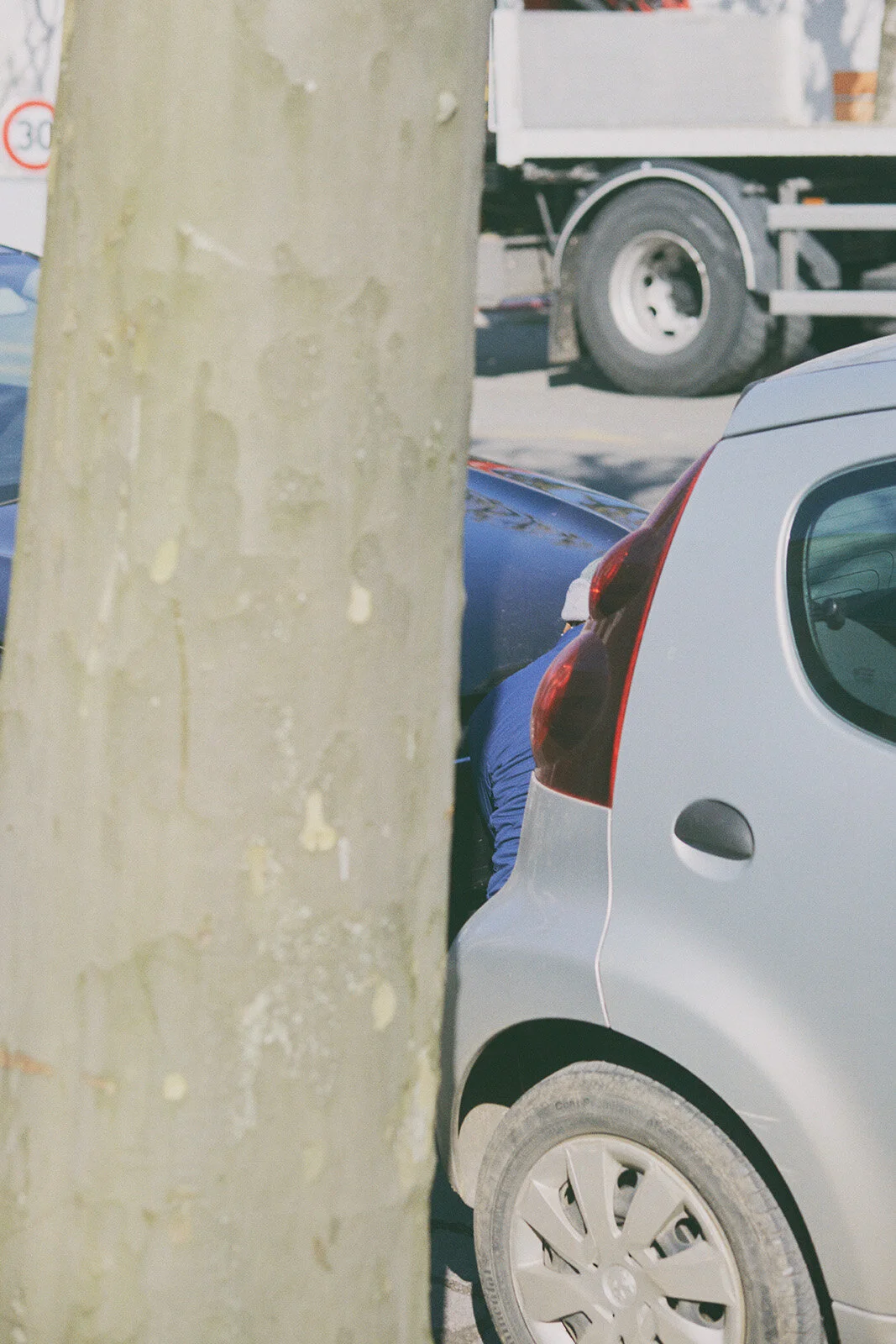
PATRICIA CAROLINA
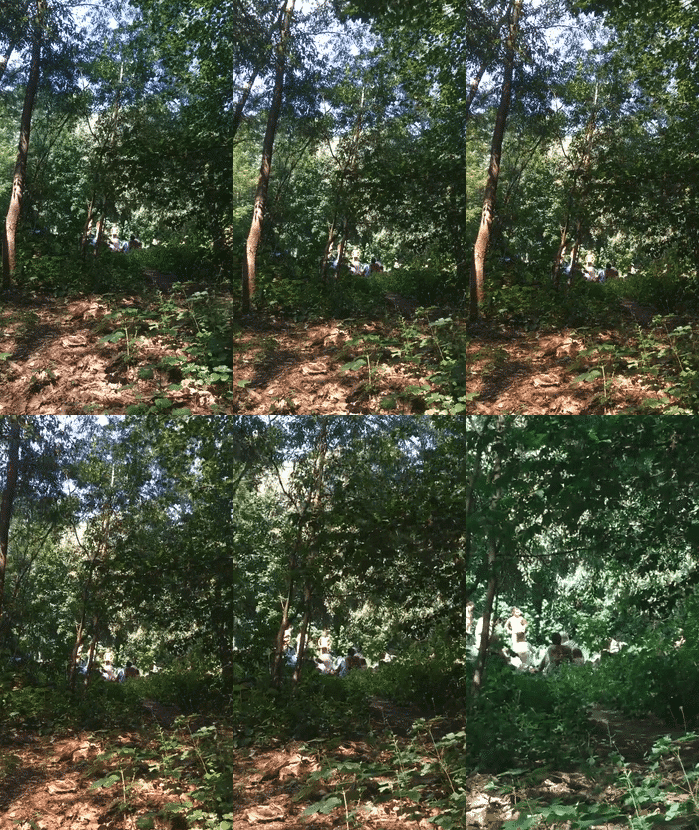
In my practice as an artist, these short clips function as letters in an upgrowing alphabet.

INDER SALIM

Inder Salim, We All Are Women’s Issues, 2003. Courtesy of the artist.
Afterimage by Nina Strand:
In the recently opened exhibition Actions of Art & Solidarity at Kunstnernes Hus (The Artists’ House) in Oslo, there is one image that embodies the title perfectly: We All Are Women’s Issues by Indian performance artist and poet Inder Salim. The photograph is from a performance by Salim in Bangalore, India, in 2003. Salim made himself into a walking billboard to protest against violence against women, using the double meaning of “issue” to show how everyone should take a stand against gender-based violence, and also that all humans come from women. As he writes in an email to me: ‘It was indeed a day-long walk on the roads in Bangalore City in 2003. There was no video possibility in those days, but I got some clicks by friends who accompanied me.’
At that time, he and his colleagues put up around 500 posters in Bangalore, and later on buses and walls in Delhi where Salim currently lives. The poster was also used by the women’s police department in Bengaluru, and by Vimochana, a NGO working for women's issues. Salim used the image as his business card for a long time, and it was also printed on a banner of about four and a half metres. ‘The situation in India, the unfortunate treatment of women’, Salim writes, ‘particularly in rural areas, is very disturbing’.
For the past 30 years, Salim has worked tirelessly within the genre of art as activism, using video and photography as well as other channels to make us look again at the world in which we live. His work deals with bodies, sexuality and gender & queer politics. Last fall Ishara Art Foundation invited to the exhibition Every Solied Page where Salim made a series of eleven different performances under the name Every Page Soiled, to be enjoyed here. As he explains his work: ‘Performance art is not body-centric, but revolves around material and subjectivities of all kinds in our respective presents.’
The exhibition’s press text claims that: ‘solidarity has re-entered the global zeitgeist with resounding force in the last decade. It has driven new thinking focused on countering systemic failures and outright abuses related to climate, economy, surveillance, health, gender and race amongst other issues.’ And it continues: ‘Actions of Art and Solidarity considers the central role that artists play within this historical shift in the new millennium, drawing parallels to synergic cases of the twentieth century.’ Looking at Salim’s career, solidarity has always been present in his performances: ‘Doing posters from my own pocket money was my passion in early days. Nowadays, I put up flags from my terrace with text to highlight different topics in our current situation.’
The latest, from five days ago, has a very simple message: ‘I love you.’
VILDE SALHUS RØED

The Same Sun
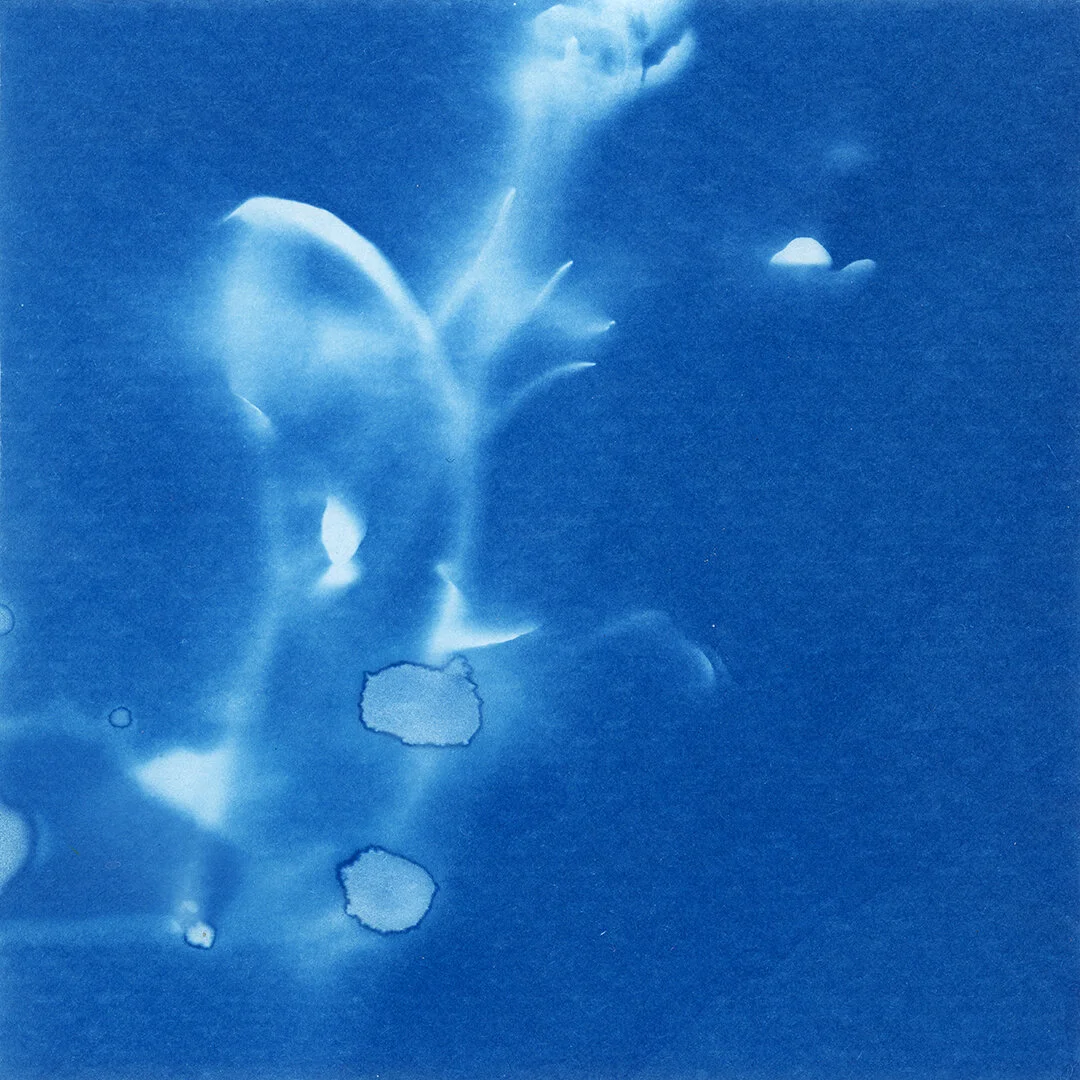
Sun prints from hikes in mountains not far away, but closer to the sun, together with Una 4 1/2 years old, in the early spring of 2020, when time and days began to flow.