BRIAN PAUL LAMOTTE ON Sonderkommando No. 283
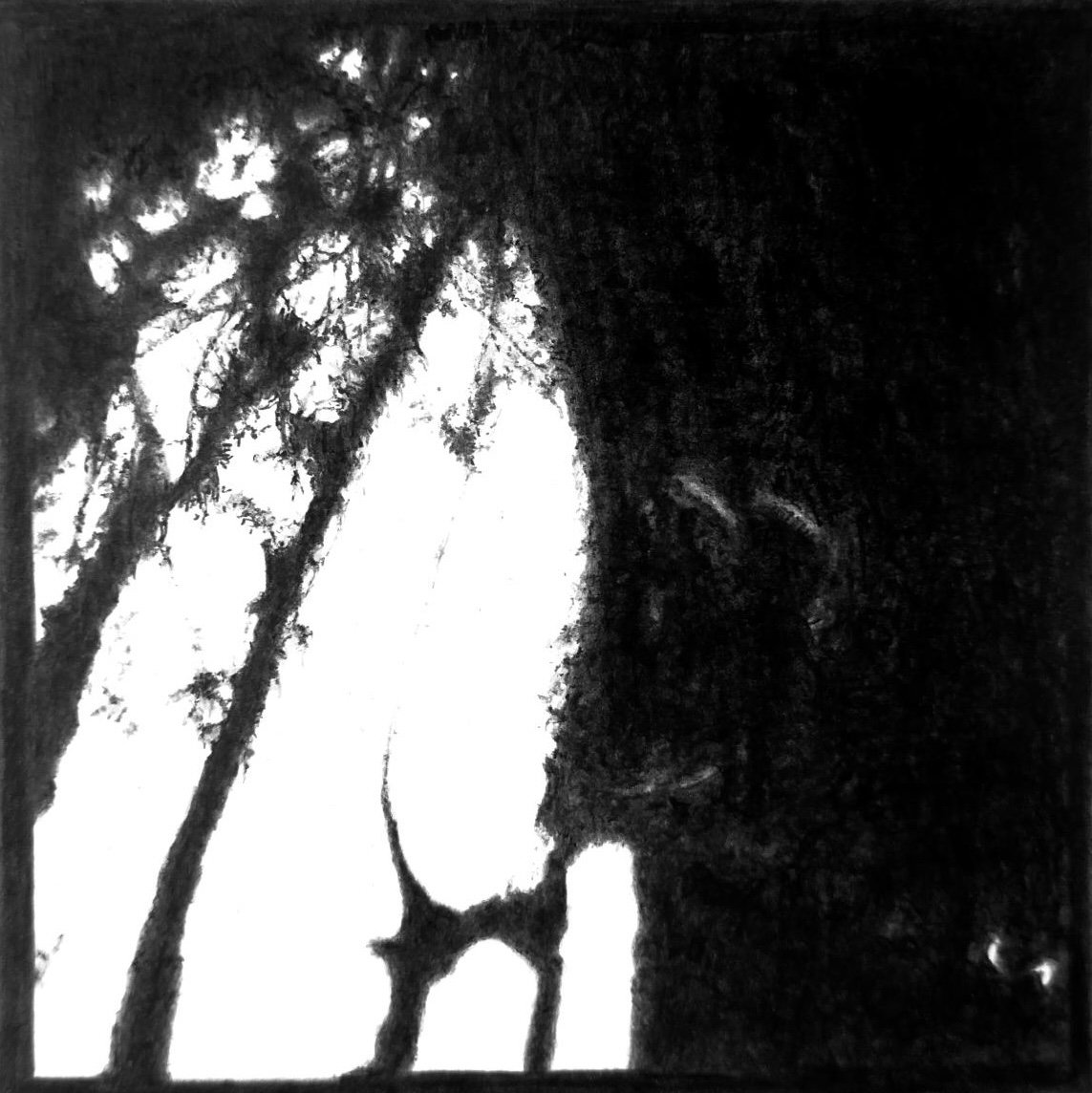
Gerhard Richter, Birkenau no. 283, Postscript.
Afterimage by Brian Paul Lamotte:
Perhaps the political power of an image isn't simply its ability to show us something.
It is its ability to make it impossible for us to say that we did not know.
For as long as I can remember, I’ve been surrounded by photographs and steeped in image culture. An early university professor keenly observed that I had seen more images in my short lifetime than all of my classmates combined. Growing up in my father’s photo studio, I had access not only to the means of production but also to endless slides, negatives, and prints. I took this for granted before that comment. I now have the privilege and pleasure of working with images daily, designing art and photography books for nearly twenty years, drawn not only to their material aspects but also to working with sequences and multiple images. It’s perhaps not a coincidence that the photograph that has stayed with me since last November cannot be separated from its place at the end of a sequence documenting one of the most horrific moments in human history.
On a brisk and grey Sunday at the tail end of Paris Photo last November, I made the journey to Fondation Louis Vuitton to see the Gerhard Richter retrospective. I went expecting blurry paintings and gestural movements to soothe my eyes and mind after a long week of photographs and books. Instead, when I reached the end of the exhibition, I was confronted with something so urgent and haunting that I couldn’t look away, and seemingly everything I had seen previously vanished. It wasn’t a painting or a book but a series of small black-and-white photographs tucked into the back left corner of a cavernous room, with four overwhelming canvases hanging adjacent and smoky mirrors on the opposite wall. The canvases were Richter’s monumental Birkenau paintings. The small photographs in the corner, framed and placed in sequence, were his source material: the clandestine Sonderkommando photographs taken inside Auschwitz-Birkenau and smuggled out through the Polish Resistance. What struck me, and what has stayed with me, is not simply the photographs themselves but the feeling of urgency and necessity when you observe them. The first two frames, No. 280 and No. 281, depict the atrocities we have come to understand and collectively reckon with. But it was the final two, and particularly No. 283 (shown above), that affected me most—not for what they depict, but for what is missing or lies outside the frame. The danger and fear we feel in the tilted frame of No. 282 become more palpable in No. 283 as form and figure fall away and we’re left with abstraction and uncertainty. Its power comes as much from what is outside the photograph as from what is inside it.
As I left the exhibition, shaken and moved in a way I hadn’t experienced before, I began an internal dialogue about political images and our contemporary image culture. We consume photographs through various feeds and endless social-media scrolls, where images of suffering become part of the same visual stream as everything else. What the Sonderkommando photographs unearthed was a more profound question for me: What has happened to our capacity to sustain attention to an image? The first two frames are figurative and frankly unimaginable, while No. 282 and, more so, No. 283 have a pastoral and abstract quality that becomes deeply unsettling once we understand their context and the frames that preceded them. One could argue they hold more resonance because of the unspectacular nature of what they don’t depict. The trees and skyline bear witness to what is outside the frame and force us to ask: What can an image make visible without showing the thing we expect it to show?
I’m writing this ten months later, sitting in a friend’s Berlin apartment I’m calling home for the next week and a half. An enormous black-and-white print sits behind me depicting a Palestinian olive tree in the occupied territories. Its monumentality and fragility, and the history carried by the tree itself, are not lost on me. Yesterday I biked past the Memorial to the Murdered Jews of Europe on my way to see a Brâncuși retrospective. Abstraction keeps reappearing. History and current politics are intertwined and colliding in this country’s collective memory as it struggles to negotiate the complexities of “never again.” What is the responsibility of memory if it does not alter how we encounter suffering in the present? No. 283 gives us trees and sky; the Palestinian olive tree carries land, continuity, displacement, inheritance, and survival; Brâncuși reduces bodies and objects towards elemental form; and the Holocaust Memorial refuses figurative representation, giving us repeated concrete forms. All, in different ways, make visible something that cannot simply be depicted.
The photographer of the Sonderkommando photographs, long identified only as “Alex” and now widely believed to have been Alberto Errera, a Greek Jewish naval officer, made these images as an act of resistance and testimony. He and the fellow prisoners who acted as lookouts risked their lives to document what was being deliberately kept unseen. The photographs survived through a chain of people who understood that this evidence had to reach the outside world. The Nazis understood that images of this nature could not be allowed to exist, that visual evidence threatened the machinery of extermination. What stays with me, and what I continue to ponder, is this contradiction: the necessity of making photographic evidence and the necessity, for those committing the atrocities, of destroying it. The image itself became an act of resistance, evidence that had to survive and reach the outside world.
We’re left with trees. Sky. Almost nothing.
Support for Palestinian Students to Study Abroad (SPSSA) is currently raising funds to help Palestinian photography students evacuate Gaza and continue their studies in the UK, covering tuition, living, evacuation, and contingency costs. Donate via Chuffed
Afterimage is an ekphrastic series exploring that one image you see when you close your eyes—the one that lingers in your mind. We invite different people to reflect on an image they can't shake. This column originated in the inaugural issue of the Objektiv journal and continues today here on our web journal.