LEBOHANG KGANYE
Santu Mofokeng’s photographs from the series Chasing Shadows and Black Photo Album/ Look At Me & Carrie Mae Weems’ images from Kitchen Table Series and Family Pictures are still on my mind. The influences and events that have changed the atmospheric pressure of my working space are oral histories, self-recollection and the recollection of others, autobiographical narratives, psychoanalytic theory and therapeutic practice dealing with transgenerational trauma.
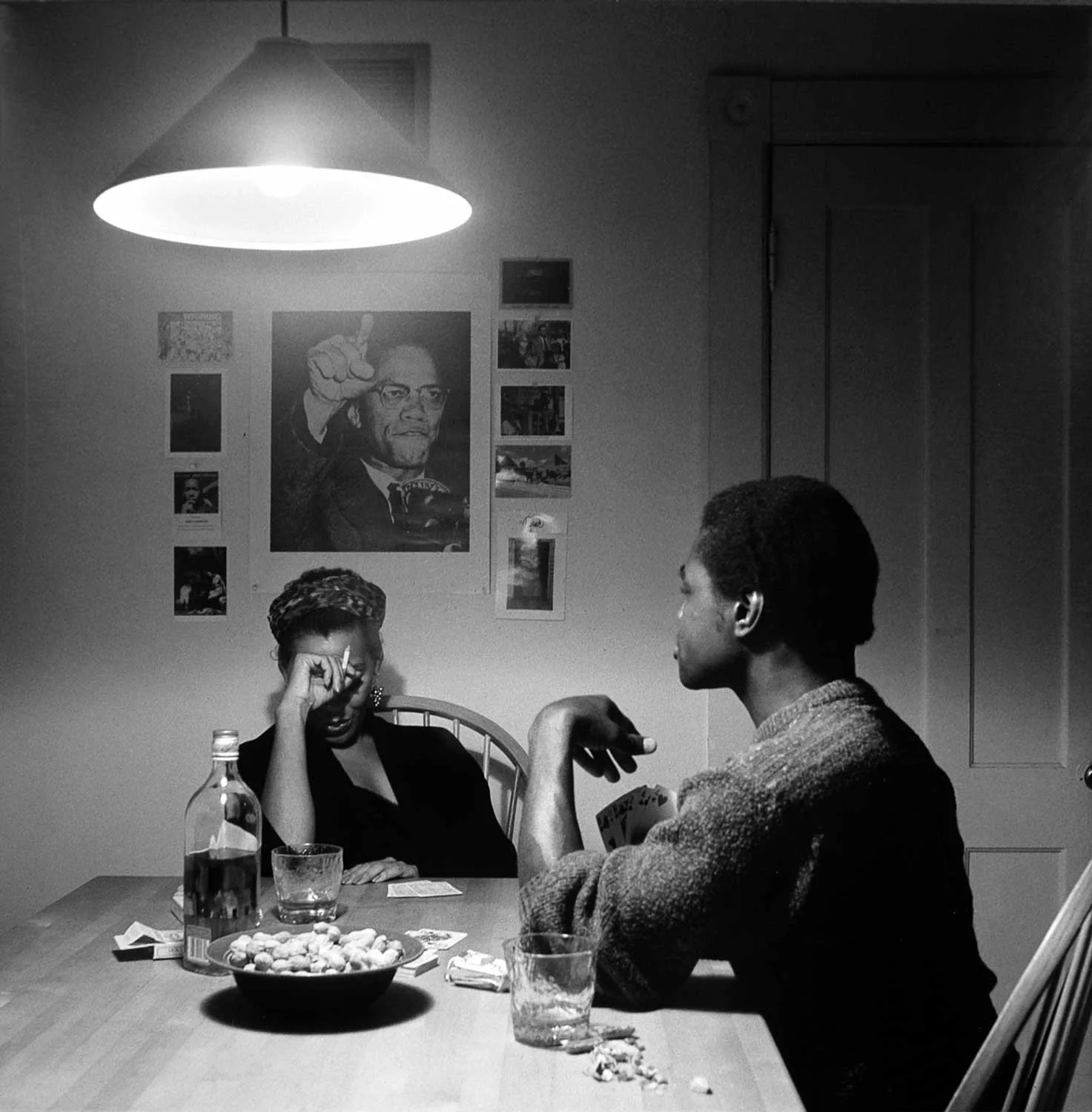
Carrie Mae Weems, Untitled (Playing Cards/Malcolm X) from the Kitchen Table II series, 1990 © Carrie Mae Weems, courtesy Jack Shainman Gallery.
Afterimages by Lebohang Kganye:
Santu Mofokeng’s photographs from the series Chasing Shadows and Black Photo Album/ Look At Me & Carrie Mae Weems’ images from Kitchen Table Series and Family Pictures are still on my mind. The influences and events that have changed the atmospheric pressure of my working space are oral histories, self-recollection and the recollection of others, autobiographical narratives, psychoanalytic theory and therapeutic practice dealing with transgenerational trauma, and the social and political climate of South Africa in the present, as well as its history, especially language and oral history. Naming and oral history is directly linked to the prohibition against black people learning to read and write in the context of apartheid. This attests to the power of literacy – voting was connected to the ability to read and write.
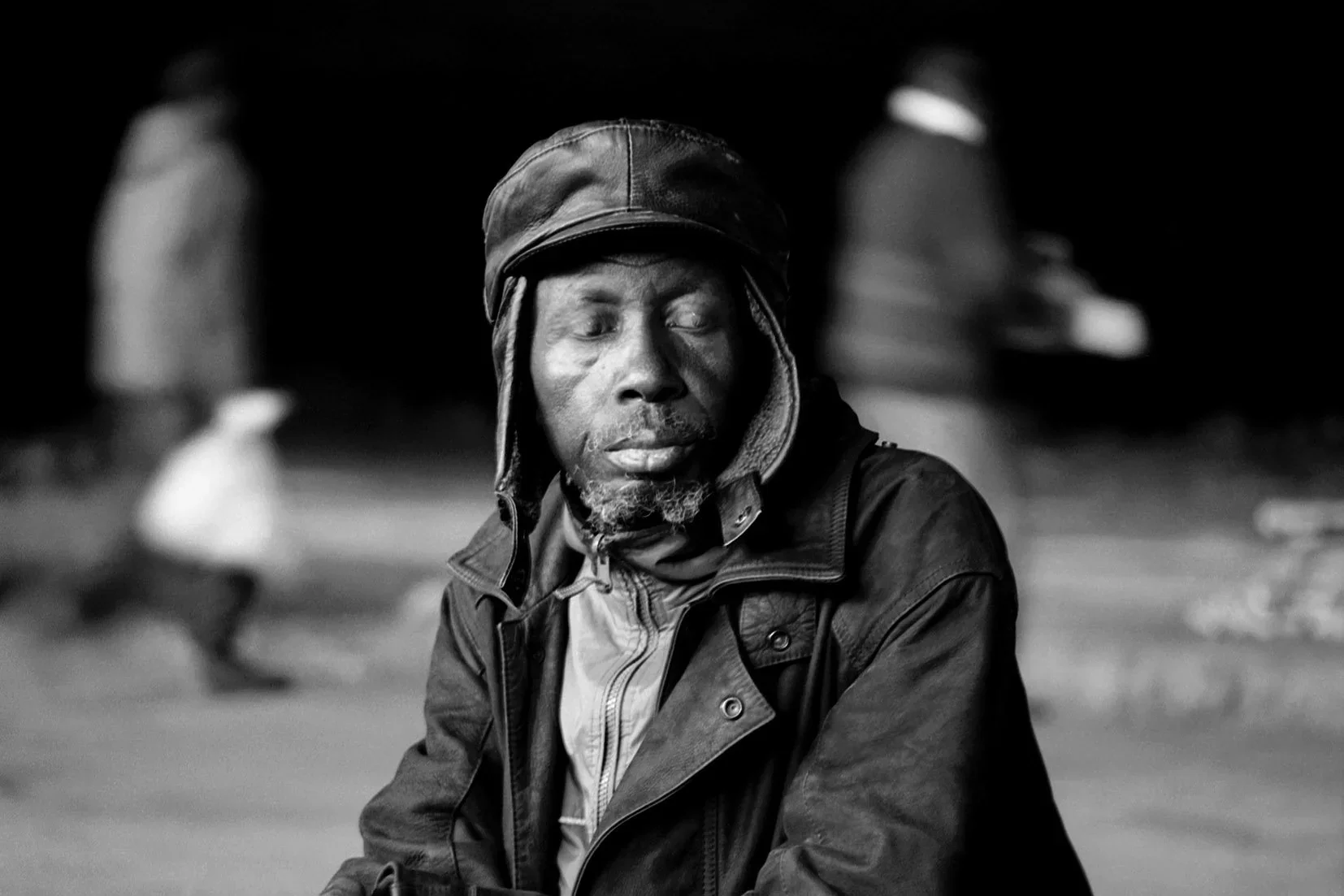
Santu Mofokeng, Eyes-wide-shut, Motouleng Cave, Clarens – Free State, 2004. Courtesy: the artist and Kunsthal Extra City, Antwerp
When asked about what comes after the pictorial turn, I’ve been thinking about ghosts – multitudinous manifestations and co-existences in a timespace between past and present – and Roland Barthes’s use of death as a metaphor for photography: the ‘presence of absent figures’ and an ‘always-already absent present’, which is ‘neither present, nor absent’. So for me, photography is a ghost, an existence in transition, hovering in a duality of time. By considering time as a construct, one can consider the ghost as a single being or as multiple possible presences, whether it is a spectre from the past, appearing in the present, or a spectre from the present, seeking refuge in the past.
From the final issue of Objektiv in 2020, marking its tenth anniversary. We gave twenty artists carte blanche to create portfolios or collage-like mind maps exploring the photography that inspires their practices. Each contribution was accompanied by a short statement.
Though not part of our Afterimage series, these contributions touch on themes of memory and perception. The artists were prompted with a set of inspirational questions, including one posed to W.J.T. Mitchell: What comes after the pictorial turn? He responded:
‘I think the study of the whole sensorium – the senses themselves, beyond vision, or as connected to vision – is one thing that follows logically after an emphasis on the visual. I never thought of images as silent; even silent movies were never silent: they had music and text.’
EM ROONEY
As a student I was obsessed with Steiglitz’s photographs of Georgia O'Keeffe, how we could watch her age (becoming more handsome with every year). We saw what Steiglitz saw (although O’Keefe lived much longer after he died). What a privilege the photographer grants the viewer, a stranger to the world of her intimacy.

Alfred Stieglitz, Georgia O’Keeffe, 1919/21, Palladium print, Alfred Stieglitz Collection.
Afterimages by Em Rooney:
The way that I’ve often thought about photographs as private, personal, and small I think might have its roots in the way photographs were often stored at my house when I was growing up. They weren’t typically on display. They were in hidden in boxes in the attic, or shoved in the pages of books – old family photos, or pictures of my mother in High School might drop out of the OED or the Joy of Sex when you pulled them off the shelf. So that relationship between the page, and image (and its one that Sontag, Barthes, Berger, Davey, and many others have often spoken about) was there for me when I was a child, and has reoccurred formally, on and off, throughout the past ten years.
This time has been stuffed to the gills with non-stop reading about, teaching about and seeing shows; talking about work (with my love, artist and collaborator Chris Domenick) first thing in the morning, last before bed at night; getting into serious fights with friends about work they like/don’t like and why; writing about work I love and curating shows, and pouring myself into it. This question, of what has resonated with me, would be incomplete unless it were to include the work of all my friends and everything I learned from Chris and his practice, and every show I’ve seen and then verbally dissected (not to mention the work of so many gifted students I’ve taught since 2010) – the number is probably in the thousands.
Catherine Opie’s show at Lehmann Maupin, comes to mind. It featured the artist Pig Pen as protagonist in a fictional, doomsday narrative laid out in a series of photographs and a video. Pig Pen (aka Stosh Fila) is a person I love looking at who Opie has been photographing for years. The magic of the photograph can be very simple, just like that; I like looking at you. And this is a watered down version of punctum I guess. It's captivating to think about who or what a photographer photographs over time. What subject does she return to? As a student I was obsessed with Steiglitz’s photographs of Georgia O'Keeffe, how we could watch her age (becoming more handsome with every year). We saw what Steiglitz saw (although O’Keefe lived much longer after he died). What a privilege the photographer grants the viewer, a stranger to the world of her intimacy. Opie’s show felt particularly impactful, in this way, as I realized her subject, had become someone I’d grown up with as well.
I think the pictorial turn might be the last turn, especially if we think of it in relationship to Foucault’s ideas about surveillance. I’ve seen corporate tools and machines that render quality/detail/data more quickly and easily, tools that are historically and presently, used for military and capital gain; drones and advanced data processing systems, used well by responsible artists. But, I worry that the merging of scientific/corporate invention and genuine creativity will continue to alienate us from our physical world, biochemical feelings, observations and instincts and this will hasten the destruction of the planet.
From the final issue of Objektiv in 2020, marking its tenth anniversary. We gave twenty artists carte blanche to create portfolios or collage-like mind maps exploring the photography that inspires their practices. Each contribution was accompanied by a short statement.
Though not part of our Afterimage series, these contributions touch on themes of memory and perception. The artists were prompted with a set of inspirational questions, including one posed to W.J.T. Mitchell: What comes after the pictorial turn? He responded:
‘I think the study of the whole sensorium – the senses themselves, beyond vision, or as connected to vision – is one thing that follows logically after an emphasis on the visual. I never thought of images as silent; even silent movies were never silent: they had music and text.’
LUTZ BACHER
Shadows and forms seem to reach out of the frame and pass right through the installation space. A hand approaches or withdraws from a chest blemished by marks. The fragility of this skin that has just been touched or is about to be touched contrasts with the image itself, which manages to convey the opposite of fragility. The black and white photograph comes from another time and yet is so necessary in our time.

Untitled (1975), Lutz Bacher. Image courtesy of the artist and Galerie Buchholz, Cologne/Berlin, and, Greene Naftali Gallery, New York.
Afterimage by Susanne M. Winterling:
Shadows and forms seem to reach out of the frame and pass right through the installation space. A hand approaches or withdraws from a chest blemished by marks. The fragility of this skin that has just been touched or is about to be touched contrasts with the image itself, which manages to convey the opposite of fragility. The black and white photograph comes from another time and yet is so necessary in our time.
The photo was shown in the exhibition Black Beauty, which included an installation in which tons of black coal slag filled the entire gallery floor, and the site-specific work Black Magic, made from vibrating black astroturf cladding the walls. The glimmering sand-like coal seemed to point to the photograph, which was placed next to the viewer’s path of the architecture. The resulting dynamic was both of lightness and heaviness, as the exhausting playfulness and desolation of the sand found a correlation in the awkward intimacy of the photograph.
This ambivalence is perhaps why this photo in particular has remained with me – its violent affirmation of a skin too thin. Like a spark, the image illuminates a certain and defined materialism within the virtual flow of information and image technology. Without concrete stability, it nevertheless affirms a dynamic and thus a reality, but one that will always remain vague, even though so visceral.
This afterimage is from Objektiv #8, 2013. Afterimage is an ekphrastic series about that one image you see when you close your eyes, the one still lingering in your mind. We invite artists and writers to reflect on an image they can't shake. This column has been a part of Objektiv since our very first issue in 2010.
ELINE MUGAAS
I’veI’ve been thinking about something that Eline Mugaas once told me: a film still that has stayed with her for a long time. The scene is from one of Constantin Brancusi’s films shot in his Paris studio. A woman is dancing on a low plinth, her body twisting as she raises her arm above her head. The movement reminded Mugaas of other images throughout art history, from antique caryatids – columns shaped like women's bodies whose function was to hold up temple roofs – to the Greek urns from the geometric period, stylised as women raising their arms above their heads and pulling their hair in grief.

Eline Mugaas, Pillow I-IV, 2019.
Afterimage by Nina Strand:
I’ve been thinking about something that Eline Mugaas once told me: a film still that has stayed with her for a long time. The scene is from one of Constantin Brancusi’s films shot in his Paris studio. A woman is dancing on a low plinth, her body twisting as she raises her arm above her head. The movement reminded Mugaas of other images throughout art history, from antique caryatids – columns shaped like women's bodies whose function was to hold up temple roofs – to the Greek urns from the geometric period, stylised as women raising their arms above their heads and pulling their hair in grief. She thought of the writhing female bodies in the paintings of both Matisse and Modogliani, all of this reminding her of the movement made when swinging an object up on one’s head or lifting a child on one’s arm.
When Brancusi installed his Endless Columns, he filmed his trip to Romania. Mugaas watched the film repeatedly and found, in a one-and-a-half-second frame, a woman at a market carrying a tin on her head with the same form she had on her mind. She saw it as a serendipitous moment, where everything comes together, belongs to each other or is created from each other. This idea of lifting, supporting and carrying is on display in Mugaas’ work Pillow I-IV, which contains images of seated sculptures taken from the Ludovisi throne at the Roman National Museum.
This afterimage is inspired by a text I wrote about Mugaas's work for Camera Austria. Afterimage is an ekphrastic series about that one image you see when you close your eyes, the one still lingering in your mind. We invite artists and writers to reflect on an image they can't shake. This column has been a part of Objektiv since our very first issue in 2010.
INGRID EGGEN
Still thinking about Ingrid Eggen's pedknots. They look so uncomfortable that it actually hurts to watch. It seems as though toes have been amputated. This makes me think about how we continue to survive in our bodies. Eggen has consistently worked with the human form throughout her artistic career – previously using symbols and signs tied to communication, where she explored how physical expression can be distorted to create something new, based on the body’s unconscious ways of collecting and storing information.
Afterimage by Nina Strand:
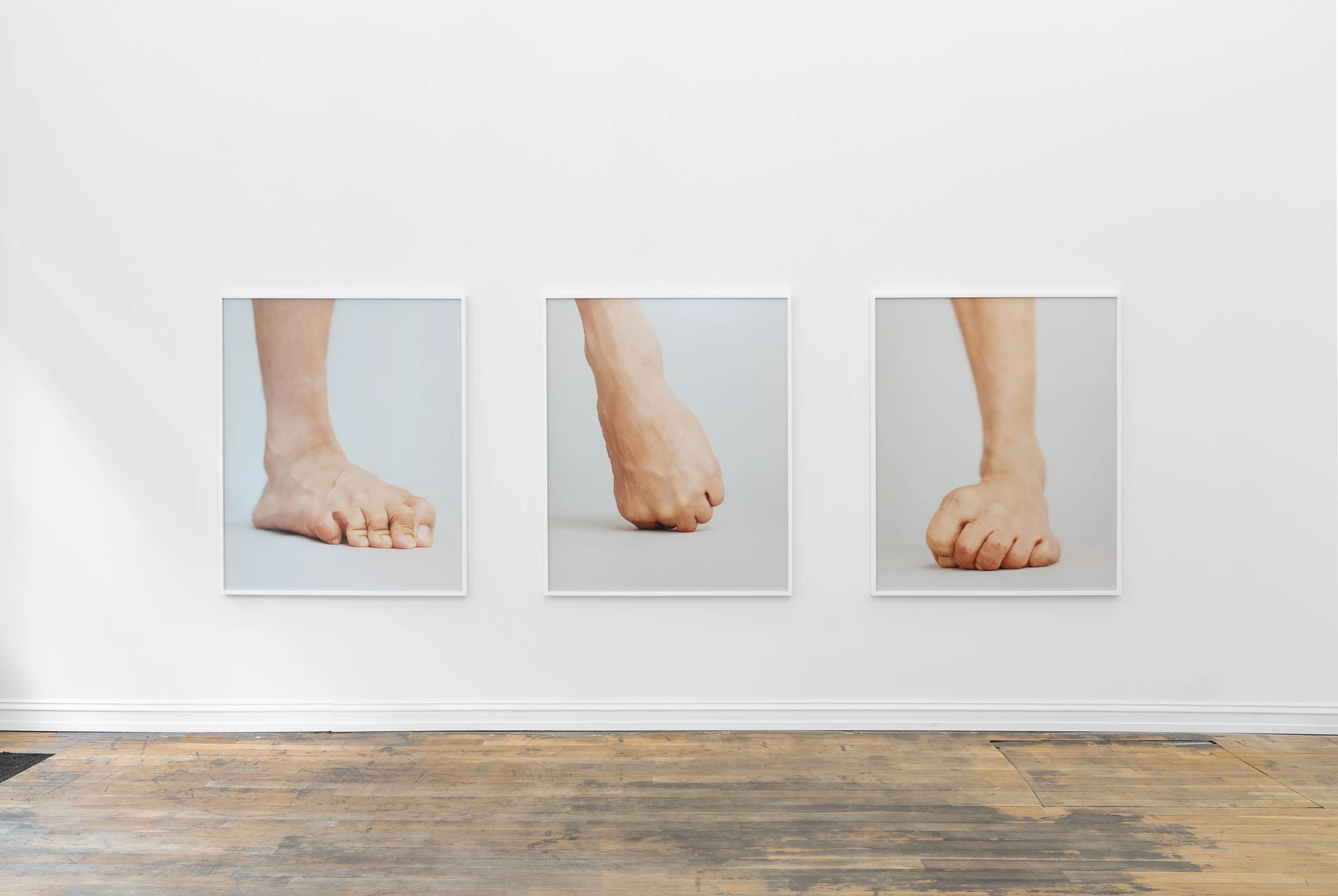
Still thinking about Ingrid Eggen's pedknots. They look so uncomfortable that it actually hurts to watch. It seems as though toes have been amputated. This makes me think about how we continue to survive in our bodies. Eggen has consistently worked with the human form throughout her artistic career – previously using symbols and signs tied to communication, where she explored how physical expression can be distorted to create something new, based on the body’s unconscious ways of collecting and storing information.
As the exhibition text describes, the works are part of an ongoing exploration of how organisms and ecosystems have developed clever, innovative solutions to problems through evolution and adaptation, and how the human body might be transformed in response to future changes – a potential vocabulary for the body's affective intelligence.
I pick up the accompanying text, a short fictional piece by Ruby Paloma, where she paraphrases Samiya Bashir's quote: ‘How will we survive this having a body? Trying to be intelligent life,’ with: ‘Perhaps the body is the most intelligent part of us.’ And maybe this is why I’m so fascinated by Eggen's insistence on photographing the body. For how are we, as the accompanying text asks, supposed to survive being a body – in the face of the world's development? These works feel important, like the beginning of something larger in an attempt to evoke a new form of corporeality – shaped by the lived experiences of the body.
Afterimage is an ekphrastic series about that one image you see when you close your eyes, the one still lingering in your mind. We invite artists and writers to reflect on an image they can't shake. This column has been a part of Objektiv since our very first issue in 2010.
SOPHIE RISTELHUEBER
My bag is heavy with books about other artists as I walk through the vast halls of the museum. I’m so impatient to find the Becker that I barely register Bourgeois’ Maman, which usually makes my breath catch. I only stop when I reach the large-scale black and white piece by Sophie Ristelhueber—scarred skin from her Every One series, inspired by her visit to war-torn Yugoslavia. The photographs were taken in a Paris hospital: fourteen close-up images of post-surgical scars serving as symbolic stand-ins for the wounds of conflict.

Sophie Ristelhueber, Every One (#3), 1994.
Afterimage by Nina Strand:
He has a plaster under his left eye—something has been removed. As he sits down, he tells me not to worry. It was only a birthmark his doctor wanted to take off, nothing important.
‘There will be more,’ I say to him. ‘Each time we meet, another small part of our bodies will be taken away.’ One by one, we’ll be stripped down. There will be less and less left of us. ‘And the worst thing,’ I say,’is that we’ll find this completely normal.’ 'It's just age,' we'll tell each other, nodding knowingly.
While Jean goes to see Louis Vuitton’s Homme show at the Palais de Tokyo—an event I’m in no way invited to—I visit the Musée d’Art Moderne. Some years ago, they hosted an exhibition of Paula Modersohn-Becker’s work, including the self-portrait that appears on the cover of the book I’m currently reading: she is pregnant, holding an extra body inside her.
The curator wrote that in her ‘numerous self-portraits, Modersohn-Becker asserts her identity as a woman, portraying herself intimately and without complacency, in an ongoing quest for her inner being.’ But I can’t find that self-portrait anywhere. I know the museum acquired another piece from that exhibition—a portrait of her sister, Herma. It’s a close-up. She wears marigolds on her hat. I want to see it.
My bag is heavy with books about other artists as I walk through the vast halls of the museum. I’m so impatient to find the Becker that I barely register Bourgeois’ Maman, which usually makes my breath catch. I only stop when I reach the large-scale black and white piece by Sophie Ristelhueber—scarred skin from her Every One series, inspired by her visit to war-torn Yugoslavia. The photographs were taken in a Paris hospital: close-up images of post-surgical scars serving as symbolic stand-ins for the wounds of conflict.
I think about Jean and me laughing about losing body parts. And now, standing in front of someone who has. I know that Paula’s last word was: ‘Schade.’ Dying eighteen days after giving birth. Her sister Herma is somewhere in this building, wearing marigolds on her hat. One of the few things Paula left behind.
Afterimage is an ekphrastic series about that one image you see when you close your eyes, the one still lingering in your mind. We invite artists and writers to reflect on an image they can't shake. This column has been a part of Objektiv since our very first issue in 2010.
DOUBLE Carol Newhouse & Carmen Winant
Double opens with a series of photographs of a woman practising Tai Chi on a beach, apparently alone, moving in and out of the waves. She seems lost in her own movements. The year is 1974, and the woman, along with her two friends, is weeks away from discovering the land where they will build a new community. They have left everything—their homes and families—to find a place where they can live outside society. This short photo-novel of the woman on the beach serves as a symbol of that dream.

A page from the book Double Carol Newhouse & Carmen Winant.
Double opens with a series of photographs of a woman practising Tai Chi on a beach, apparently alone, moving in and out of the waves. She seems lost in her own movements. The year is 1974, and the woman, along with her two friends, is weeks away from discovering the land where they will build a new community. They have left everything—their homes and families—to find a place where they can live outside society. This short photo-novel of the woman on the beach serves as a symbol of that dream.
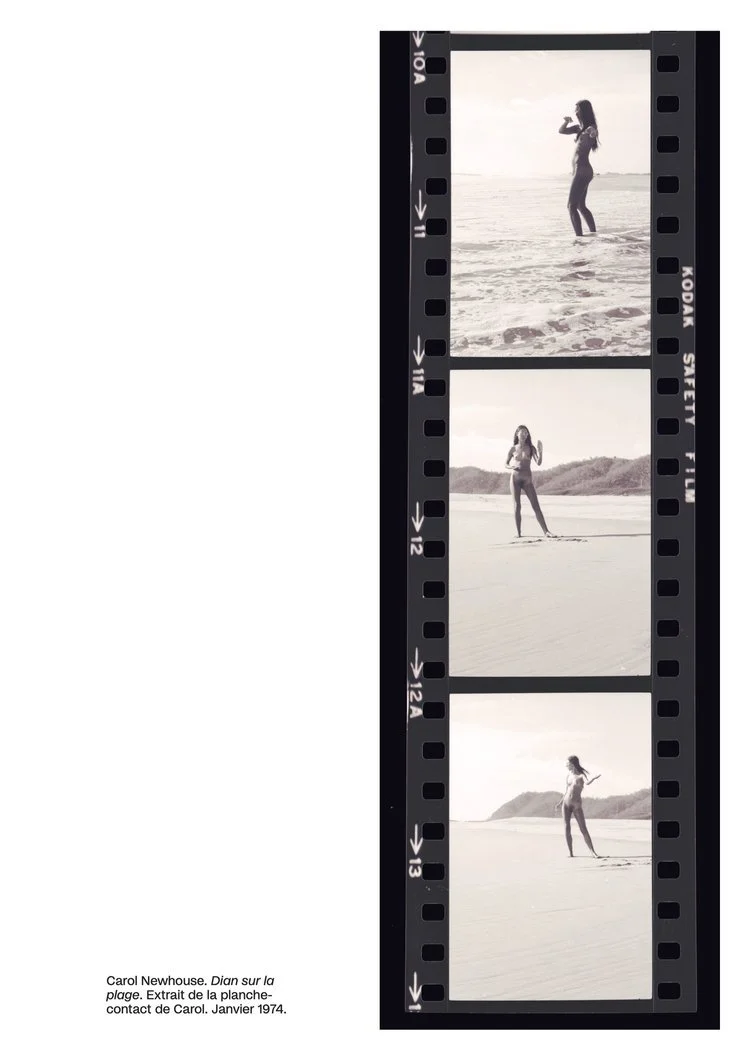
And let this dream begin with Carol, who captured the series on the beach. In the 1976 book Country Lesbians, about the community they built, we learn that she and the woman on the beach, Dian Wagner, met in college and later lived with Carol’s then lover, Billie Miracle, in a collective in Nova Scotia. Wagner dreamed of returning to the States to buy land, envisioning a future where they could build a more sustainable and independent life. Later, Carol recalls that they didn’t feel as if they would need to give up very much. Even if they didn’t know where and what the land they eventually found would be, they were just filled with passion and a confidence that they would find something better. They knew they had to leave a system they felt was harmful to them.
(…)
This dream of a new future was something that Carmen also sought. For her 2018 project My Birth, she extensively researched the international lesbian-separatist communities and became fascinated by these images that capture a radical movement toward lesbian self-determination. As she puts it, these photographs, created by and for women, reflect a world rooted in mutual recognition: women behind the camera, photographing one another and building lives outside the structures of patriarchy. In this context, photography becomes both a survival strategy and a shared language—an archive of intimacy, pleasure, labour and resistance.
An excerpt from Double. Order your copy now at our online bookstore.
DOUBLE Carol Newhouse & Carmen Winant
In a 2022 conference, On Wimmin's Land at Oregon University, Carol Newhouse talks about her experience at WomanShare, about sharing her life through photography—how she spent time in the funky little darkroom they built, staring in wonder at her photographs. She wanted to capture the strength she felt on the land. She reflected on how to create images that conveyed a sense of togetherness in an environment that was both healing and challenging.
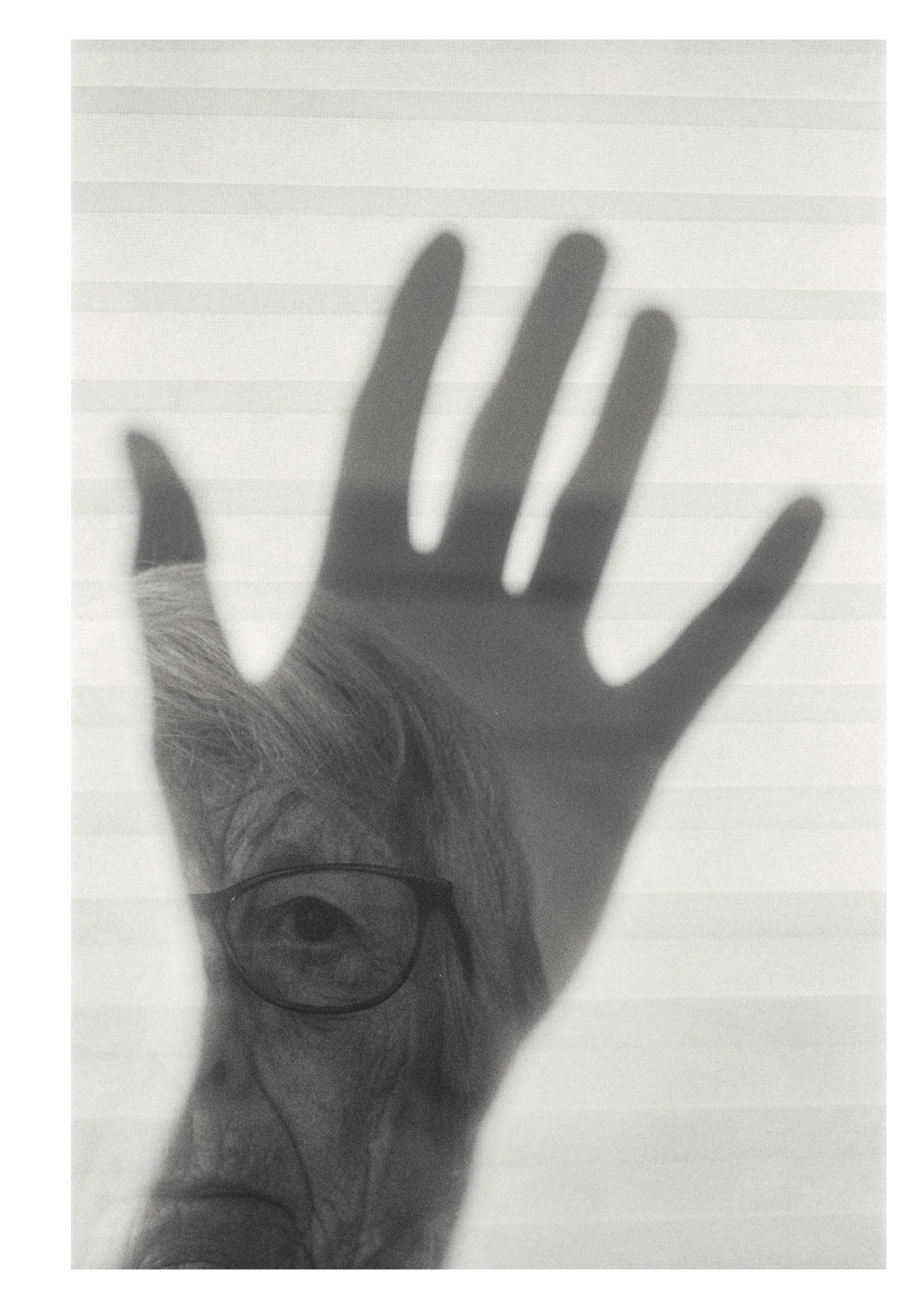
Double by Carol Newhouse & Carmen Winant, 2025.
In a 2022 conference, On Wimmin's Land at Oregon University, Carol Newhouse talks about her experience at WomanShare, about sharing her life through photography—how she spent time in the funky little darkroom they built, staring in wonder at her photographs. She wanted to capture the strength she felt on the land. She reflected on how to create images that conveyed a sense of togetherness in an environment that was both healing and challenging. She talked about how all the women brought who they were to the lands and then negotiated who they became. She called WomanShare “a place of power,” where they could realize their full potential. As she spoke about slowly becoming visible to herself and to each other, I thought about how an analogue image emerges through the development process.
The vast number of publications produced by these Lesbian Lands—zines, pamphlets, magazines—demonstrate how photography became an important tool; making pictures became a way to reclaim and reinvent. Between 1979 and 1981, Newhouse was part of the Ovulars, a series of photographic workshops for women. (The word “ovulars” is a replacement for “seminars,” whose etymology relates to “spreading seed” or semen.) Over the course of three summers in the late 1970s and early 1980s, women met to take pictures, get inspired, and share ideas.
For her 2018 project My Birth, Carmen Winant extensively researched these intentional lesbian-separatist communities and became fascinated by the images that captured a radical movement toward lesbian self-determination. As she puts it, these photographs, created by and for women, reflect a world rooted in mutual recognition—women behind the camera, photographing one another, and building lives outside the structures of patriarchy. In this context, photography becomes both a survival strategy and a shared language—an archive of intimacy, pleasure, labor, and resistance.
I've often thought about what an Ovular workshop might look like today, particularly in terms of choosing one’s own representation and exploring the freedom that comes with it. And that is how their year-long dialogue began: during the first Zoom conversation, after receiving the green light from the Les Rencontres d'Arles team, Carmen, Carol, and I shared on screen this double exposure The Promise. Carol was sitting in her Bay Area living room, wrapped in the morning light from a window. Carmen was in her Ohio studio at noon, with some collages visible behind her. I was at a makeshift desk in my flat in Oslo at six in the evening. In a way, we were all on that beach—the images from that day becoming a fulcrum for Double—a dialogue between Carmen and Carol, an exploration of how to make work in this way.
An excerpt from Double Carol Newhouse and Carmen Winant—published in conjunction with the exhibition Double at Les Rencontres d’Arles.
DOUBLE Carol Newhouse & Carmen Winant
Is it possible to leave everything behind? Is it possible to begin again, outside and beyond every system of living you've ever known, reinventing what it means (and looks like) to exist as a body and soul on the land?’ These questions shaped Carmen Winant's exploration of radical reinvention, particularly within the context of the lesbian separatist communities of the 1970s. Through this process, Winant connected with Carol Newhouse, co-founder of Womanshare, a lesbian feminist community on the West Coast of the United States.

Double by Carol Newhouse & Carmen Winant, 2025.
‘Is it possible to leave everything behind? Is it possible to begin again, outside and beyond every system of living you've ever known, reinventing what it means (and looks like) to exist as a body and soul on the land?’
These questions shaped Carmen Winant's exploration of radical reinvention, particularly within the context of the lesbian separatist communities of the 1970s. Through this process, Winant connected with Carol Newhouse, co-founder of Womanshare, a lesbian feminist community on the West Coast of the United States.
Winant’s and Newhouse’s ongoing friendship and dialogue has evolved through several collaborative projects that examine the transformative impact of feminist movements from that era, viewed through the lens of Newhouse's photographic practice and archive. The medium became an essential tool for Newhouse, allowing her to assert and control her own representation.
For Les Rencontres d'Arles, they've created unique new work that weaves together their ongoing lives. Over the course of a year, they engaged in a photographic dialogue—one would shoot a roll of film, wind it up, and send it across the country, where the other would expose it once more—using the technique of double exposure to create a layered interplay between their images. Double exposure embraces the element of unpredictability, where the layering of images lead to unforeseen narratives that challenge conventional photographic control. This technique used by Newhouse and her comrades to play with the singularness of pictures, or the claim of a solitary (often masculine) art creator.
Through this creative collaboration, the artists reclaim feminist photographic strategies. With a fulcrum in a series of images by Newhouse from the very beginning of the community, Winant and Newhouse invite us to consider how we reinvent ourselves and our histories—both individually and collectively—through the act of shared self-representation and interconnection. Their visual conversation gives shape to intergenerational relationships and feminist political legacies while bringing the experimental photographic practices of the past into the present.
The exhibition is part of Les Rencontres d'Arles, and can be seen until October 5.
TORBJØRN RØDLAND
I like to compare it to walking—something very natural for us, just like the act of seeing. But then, once you stumble over something, your next steps become cautious. You think, “I have to be careful,” and you place your foot more deliberately. You become aware of something that usually happens automatically. And for me, Rødland’s images work the same way. They are images you stumble on, and suddenly you become aware of your own process of seeing—how you see, what you see, and how you move through the world. Afterwards, you’re more attentive to the imagery that surrounds you and the mechanisms behind it. At least, that’s the effect his images have on me.

Torbjørn Rødland, This is My Body, 2013-15. Courtesy of Galerie Eva Presenhuber and Algus Greenspon
Afterimage by Ann-Christin Bertrand:
What always comes back to my mind are the images by Torbjørn Rødland. I worked with him many years ago when curating his show at C/O Berlin, but even now, those images still hold up. He’s referring to so many fields of visual culture that are relevant for us—whether it’s art history, religion, pop culture, or social media. So his images at first sight seem very familiar and make us immediately find numerous links to other visual worlds we know.
But then, this familiarity comes along with a certain weirdness—something slightly uncanny, unfamiliar, surreal—that evokes very mixed feelings. And that connects the intellectual perception with emotion. It’s exactly this connection that makes you feel a bit uncomfortable, allowing his images to stay in our minds instead of just becoming part of the constant image flow surrounding us everywhere.
I recently invited Brooklyn-based artist Charlie Engman to give a lecture at BA Camera Arts, the study programme I am currently heading at Lucerne University.* He said that when he published his latest book, Cursed, people reacted very emotionally—either completely repelled or totally loving it. There seems to be a kind of link to Rødland, although Engman, in Cursed, works entirely with AI, while Rødland works with analogue photography and is much more focused on materiality and physicality. But this triggering of emotion, this uncanniness and surrealism—they both share that. For me, there’s something similar in how their work functions. They confront us with images that are at once familiar and strange, that make it impossible to rely on our usual categories of perception.
I like to compare it to walking—something very natural for us, just like the act of seeing. But then, once you stumble over something, your next steps become cautious. You think, “I have to be careful,” and you place your foot more deliberately. You become aware of something that usually happens automatically. And for me, Rødland’s images work the same way. They are images you stumble on, and suddenly you become aware of your own process of seeing—how you see, what you see, and how you move through the world. Afterwards, you’re more attentive to the imagery that surrounds you and the mechanisms behind it. At least, that’s the effect his images have on me.
His work This is My Body, which I selected for Afterimage, is already about ten years old, but it still works well for me. It brings together both layers: mind and intellect, gut and emotion, body and feeling. There’s something caring in the depicted gesture on one side, but it could also completely shift in a weird direction. There’s innocence, but at the same time an erotic touch—and also a religious one. Rødland manages to hold all of that at once. There’s something strange in the situation—the person being depicted oscillating between adult and child, between masculine and feminine—the gesture between care and, at the same time, enclosure or power.
And I think that’s what makes a good image for me today. In this omnipresent visual culture, I need something that involves me emotionally, something that isn’t easily readable or solvable, something even unsettling. The more the message or situation depicted stays unsolvable, ambiguous, the more it stays with you—because you’re chewing on it, you want to grasp it, and you just can’t.
*Lucerne University of Applied Sciences and Arts / Design, Film and Art.
Afterimage is an ekphrastic series about that one image you see when you close your eyes, the one still lingering in your mind. We invite artists and writers to reflect on an image they can't shake. This column has been a part of Objektiv since our very first issue in 2010.
THALIA STEFANIUK
So I try to reframe the picture—literally and metaphorically. I adjust the aperture. I redefine what accomplishment means. For me, it’s these bonds—this rhizomatic support system—that I return to. For a long time, I kept a rejection letter from a theatre school I desperately wanted to attend framed on my wall as motivation—a reminder that good and bad things are two sides of the same coin, and that neither should be clung to too tightly. But I’ve replaced it now. I chose this photo instead. It’s also a motivator—but one that celebrates the connections I’ve made, the ongoing and slow-moving process, not just the moments of success or failure.

Afterimage by Thalia Stefaniuk:
Even though I’m a curator, I hardly have any art hanging on my walls at home. One of the only images I’ve put up isn’t even an artwork—it’s an iPhone photo my family took of me, surrounded by friends at the opening of my 2024 exhibition Weight of Mind at the Hessel Museum in upstate New York. I love the contrast in this image: the show—a sculpture and photography exhibition featuring Kaari Upson, Jes Fan, and Lucas Blalock—explores memory, the body, and the tension between the visible and invisible forces that shape both. And yet, ironically, it contains no easily recognizable bodies. The artists fragment, disfigure, and hybridize body parts, merging them with other materials to create unfamiliar forms. But in this photo, it’s all familiar bodies—many of my closest friends (not all pictured), shoulder to shoulder, filling every inch and spilling out of the frame.
When I moved to New York, I had to leave behind the community I’d spent my entire adult life building in Montreal and Toronto. It felt like I was turning away from something real and grounding toward something intangible and uncertain. As an only child, friendship and community have never been things I take for granted—they’ve always been something I’ve worked hard for. I began falling into a kind of echo chamber in my head, a self-fulfilling prophecy: I feel isolated, therefore I am isolated. But that wasn’t true. My people were with me, supporting me every step of the way. And at the opening, I got to experience the physical manifestation of that support.
Almost all my friends and family from Montreal, Toronto, and New York came. They piled into cars, booked Airbnbs, and most of them crammed into my tiny one-bedroom apartment, sleeping in rows like sardines in sleeping bags. I remember spending weeks alone in the gallery during planning and installation, and then—suddenly—it was filled with the bodies of my friends, family, colleagues, and collaborators. People from every stage of my life, all moving through the stories, materials, and histories of the artwork I care so deeply about.
In Kaari Upson’s installation, eleven, she embedded casts of her knees into casts of trees from the landscape of her childhood home—a place marked by complicated memories. She literally fuses the idea of home with the physicality of the body. It’s not a romantic image of nostalgia. The limbs hover in a haunting, dreamlike forest—weightless, disembodied, rootless. I painted the back wall of the gallery a cartoon-like sky blue and spaced the works widely apart to heighten that feeling of suspension. I wanted the public to feel the tension between lightness and gravity of the show—the formal sensation of being suspended and unmoored, alongside the emotional weight of the subject matter of each artwork, and the personal histories the public carry in their own bodies.
What I didn’t anticipate was what it would feel like to have others fill the negative space between the objects. For example, walking around the legs stirred the air and caused them to spin slightly. The people in the space—literally and metaphorically—animated the works and enlivened the connection between them. But seeing my community inhabit that space added a personal and emotional weight of having so many people I love in one space. An intense emotional high and a simultaneous feeling of being grounded that I’ll never forget. It reminded me of the profound power of physical gathering—how an audience can complete, complicate, and transform an exhibition in ways you can’t anticipate on your own.
Looking ahead, I dream of cultivating a collaborative practice that feels like a band or a collective. Before curating, I worked in film—long, 14-hour days on set created a kind of intense group energy. While trauma bonding doesn’t always lead to real friendship, at the end of the day, if I spend more time with my collaborators than anyone else in my life, I want to make those relationships meaningful. I want to work with people who care deeply about community, who take ideas and creativity seriously, and who are invested in building a sustainable way of working. I imagine a curatorial model grounded not just in conceptual or formal relationships between works, but in real human relationships between people, including artists, art workers, and the network of connections that each of those individuals brings with them.
The image on my wall from that opening is a kind of evidence. Sometimes I need reminders—fragments of proof—because it’s easy to get lost in your own narrative. It’s a cliché, but it’s true: the art world feeds off a scarcity model and myth of isolated genius—never enough space, never enough opportunity, a careerist culture of eat-or-be-eaten. The hunger for validation is a bottomless pit. It will never be enough. I am currently working my dream job in curation at the New Museum but even now there’s still always a “next thing”—there’s no final mountaintop where you arrive.
So I try to reframe the picture—literally and metaphorically. I adjust the aperture. I redefine what accomplishment means. For me, it’s these bonds—this rhizomatic support system—that I return to. For a long time, I kept a rejection letter from a theatre school I desperately wanted to attend framed on my wall as motivation—a reminder that good and bad things are two sides of the same coin, and that neither should be clung to too tightly. But I’ve replaced it now. I chose this photo instead. It’s also a motivator—but one that celebrates the connections I’ve made, the ongoing and slow-moving process, not just the moments of success or failure.
Afterimage is an ekphrastic series about that one image you see when you close your eyes, the one still lingering in your mind. We invite artists and writers to reflect on an image they can't shake. This column has been a part of Objektiv since our very first issue in 2010.
AYO AKINSETE
In Moyo, Akinsete portrays a man, partly in shadow, sitting on the edge of a flowery sofa, looking solemnly out the window in front of him. You can’t tell whether he’s focused on something happening outside the window or if he’s not looking at all, just deeply embedded in his own mind. But you know that he sits alone in this room, looking out.

Ayo Akinsete, Moyo, 2018.
Afterimage by Lisa Bernhoft-Sjødin:
In Moyo, Akinsete portrays a man, partly in shadow, sitting on the edge of a flowery sofa, looking solemnly out the window in front of him. You can’t tell whether he’s focused on something happening outside the window or if he’s not looking at all, just deeply embedded in his own mind. But you know that he sits alone in this room, looking out.
The work is like a call to action, a call for an early start at sunrise. A call to move away from what has been, and move beyond the horizon before you. The title is also the namesake of the Nigerian Nobel prize laureate Wole Soyinka’s memoir from 2006. For those with little or no insight into Nigerian socio-politics, the playwright, essayist and poet Soyinka often symbolises a cause; political freedom of choice, both in Nigeria and Africa at large. His writings meditate on personal identity and a fervent critique of dictatorial rule from the mid-1950s onward.
In the memoir You must set forth at dawn (2006) Soyinka tells his life story up until the then present, in the form of anecdotes, poetry and dialogue, placing himself and people he cherishes in the story of resistance in Nigerian socio-politics. In it, he’s on his way back to Nigeria after a 5 year long exile. Soyinka describes his exile state as a «liminal but dynamic» state similar to a parachutist’s free fall. Liminal because one is in a non-scripted space, forced there by adversiaries in one’s homeland, being ousted as an enemy of the state. Dynamic because from this space you can take something like a bird’s-eye view on the country you fled from, and if you are in a safe space outside, you can start forming a new language of resistance. The memoir, as memoirs go, is also an intimate account of his life, friendships and loves, in the face of a cherished and troubled country.
Akinsete’s photographies are also intimate. The intimacy is tactile, like a living and breathing organism. I could describe the portrait as of someone in exile, an expression of sadness, someone longing, someone lonely. I could also describe the man as anticipating something, waiting for the right moment to rise and step out. The portraits lend intimacy to the series’ images of landscapes. The landscapes depict indiscernable oceans or lakes, a clearing in a forest, an industrial place, a dark cloudy sky, tangled and sculpturised industrial residue. It feels like Akinsete is portraying absence in these. A meditation on, if not the bird’s-eye view of exile, then a meditation of absence that’s propelled by a question Akinsete poses in his artist statement: ‘How do you navigate through borders and around unamerican surfaces as the privileged subject of an empire you no longer believe in?’
Afterimage is an ekphrastic series about that one image you see when you close your eyes, the one still lingering in your mind. We invite artists and writers to reflect on an image they can't shake. This column has been a part of Objektiv since our very first issue in 2010.
OBJEKTIV PRESS 15 YEARS!
Founded in 2009, Objektiv began as a biannual journal dedicated to lens-based art. The very first issue was released in April 2010. After a decade of exploring that format, Objektiv transitioned into a more book-like publication, inviting a single writer to fill its pages with raw and authentic reflections on trends within the medium.

This photograph by Tom Sandberg is featured in Making Worlds, Objektiv #22, written by Morten Andenæs.
Founded in 2009, Objektiv began as a biannual journal dedicated to lens-based art. The very first issue was released in April 2010. After a decade of exploring that format, Objektiv transitioned into a more book-like publication, inviting a single writer to fill its pages with raw and authentic reflections on trends within the medium. Objektiv Press have just released Elle Pérez’s the movement of our bodies, a collage of loose thoughts, letters, press articles and reviews, text messages, pictures, sketches, responses, emails, notes, and lectures, the book explores what Pérez chooses to photograph and what photography means to them. More here.
Objektiv Press’ next release is in the works. The book Double will accompany the exhibition of the same title with Carol Newhouse and Carmen Winant for this year’s edition of Les Rencontres d’Arles. Through Carmen Winant’s exploration of radical reinvention—particularly within the context of the lesbian separatist communities of the 1970s—she connected with Carol Newhouse, co-founder of WomanShare, a lesbian feminist community on the West Coast of the United States. For Double, they’ve created unique new work that weaves together their stories, passions, and curiosities. Over the course of a year, they engaged in a photographic dialogue: one would shoot a roll of film, wind it up, and send it across the country, where the other would expose it again—using the technique of double exposure to create a layered interplay between their images. More information here.
Since the very first issue in 2010, Objektiv has asked a wide range of people to describe the image they can’t stop thinking about. Originally titled Sinnbilde, this column now appears on Objektiv Press' web journal under the name Afterimage. It is an ekphrastic series about that one image you see when you close your eyes, the one still lingering in your mind.
Objektiv Press extends heartfelt thanks to everyone who has contributed so far — the artists, the writers, the copy editors, the designers, the printers, the supporting foundations, and all the members of our editorial board, especially Lucas Blalock, Ida Kierulf, Brian Sholis and Susanne Østby Sæther. Most of all, thank you to our readers.
EUGÈNE ATGET
My favorite photograph of Atget’s is deceptively simple. It is from 1925, two years before his death. He made it during the seven-o’clock hour as winter turned to spring in the Parc de Sceaux. A tree cuts the frame vertically, splitting our view of the water in half. This formal choice creates the illusion that the pond is a waterfall—or a portal to another plane of existence.
Afterimage from our latest publication the movement of our bodies by Elle Pérez:

Eugène Atget, Parc de Sceaux, 1925.
My favorite photograph of Atget’s is deceptively simple. It is from 1925, two years before his death. He made it during the seven-o’clock hour as winter turned to spring in the Parc de Sceaux. A tree cuts the frame vertically, splitting our view of the water in half. This formal choice creates the illusion that the pond is a waterfall—or a portal to another plane of existence. Atget might have been surprised by how familiar this view on the ground glass felt, even in his twilight years. And, as photographers know, this feeling of surprise can often inspire the making of a photograph, quickly turning into intention.
Having spent his formative years as a cabin boy at sea, he would have regularly stood watch on deck as part of his duties. The tree, dead center in the frame, recalls the view of the water from the helm of a ship, mast bifurcating both water and the horizon. The branches of the tree softly lay over one another to form an X in the top left of the frame.
Perhaps Atget recalled the intersecting ropes that he would have used to control the sails of the ship, through which his view of the sky was mediated, day in and day out. Or did he remember the chill that came over the crew whenever someone would tell stories of the high seas? The crossed bones, red flags, creatures, and treasures that plagued the sailors of the previous century? Or maybe he recognized the symbol from the international code of maritime signals, which was standardized the year of his birth, and already in use during his tenure at sea.
Even after all those dry and steady years on land, the message would have been clear to him: ‘I require assistance.’
In the winter of 1925, Atget could likely sense the nearing end of his own cycle of seasons. An existential plea was probably quite resonant to his state of mind—strained, I imagine—as he witnessed the fast decline of his wife’s health. Valentine died in June 1926. In August of the following year, Eugène followed her.
At only seventy years old, he slipped away into the warmth of the late summer light.
For those in New York, check out Elle Pérez's The World Is Already Beginning Again: History with the Present at Arts and Letters. Afterimage is an ekphrastic series about that one image you see when you close your eyes, the one still lingering in your mind. We invite artists and writers to reflect on an image they can't shake. This column has been a part of Objektiv since our very first issue in 2010.
DOUGLAS GORDON
It could be the image of the watermelon that lingers in my mind as I sit at Zürich Flughafen, waiting for a flight from a non-EU country back to my own. The reopening of Fotomuseum Winterthur has been reassuring—it’s a place where lens-based art is taken seriously. And this series on how we relate to emojis in our digital world feels important.
Afterimage by Nina Strand:

Douglas Gordin. Taken by the author seeing the exhibition WALL WORKS & SCULPTURES at Galerie Eva Presenhuber in Zürich, 16th of May, 2025.
It could be the image of the watermelon that lingers in my mind as I sit at Zürich Flughafen, waiting for a flight from a non-EU country back to my own. The reopening of Fotomuseum Winterthur has been reassuring—it’s a place where lens-based art is taken seriously. And this series on how we relate to emojis in our digital world feels important, especially that symbol this weekend, being in the host country of the music competition, where one nation should probably not have been allowed to participate.
There’s so much to take in after the exhibition—and from my afternoon wandering Zürich, just twenty minutes away by train. The city holds it, too, in small ways: graffiti on the walls that reads Free Gaza. It stays with me, especially when I see a work made of scaffold dust sheets and other materials, said to suggest that buildings—and maybe societies, too—are always in progress, never truly complete. I think of it again as I pass a man sitting in a window, sipping wine and watching the people below. It’s a clever, much cheaper way to people-watch, but I wonder if he’s sitting up there alone because he’s afraid to join the rest of the world. Does he need help?
When I can’t see more art—everything is closed—I have a glass of wine at Kronenhalle, a tip from two different friends. I sit next to some artists and gallerists speaking in excited tones about an opening yesterday at a place that, sadly, wasn’t on my itinerary. They’re also talking about next year’s Venice Biennale and what will happen now that its curator has passed—something I’ve also thought about. Where do all her visions for next year’s edition go?
There’s something familiar about the woman sitting in the corner of their group. I want to look her up, but instead, I ask if they could watch my things while I look at the art in the restaurant. When I return, she laughs and says she never took her eyes off my stuff. I want to move closer to their conversation.
Later, at the airport, I look up images of one of the most famous Swiss artists I know—and it is her. I got her. I got all the art. But what is it I’m really looking for, walking and taking trams all over these two cities to see as much as I can in the short time I’m here? What does it help, anyone suffering?
Waiting for my plane, I thought I was sitting down to write about the fruit emoji. But instead, I think of a text work I saw on one of the gallery walls: Where does it hurt? I mumble to myself: Everywhere.
Afterimage is an ekphrastic series about that one image you see when you close your eyes, the one still lingering in your mind. We invite artists and writers to reflect on an image they can't shake. This column has been a part of Objektiv since our very first issue in 2010.
PATRICK NAGATANI
Although this body of work was made over two decades ago during the high phase of postmodernism, its concerns around the way that truth is constructed resonated deeply. Its critical engagement that is, with the photographic image as a composite of interwoven narratives and suspensions of disbelief, felt timely and urgent against the backdrop of a politics increasingly stranger than fiction.
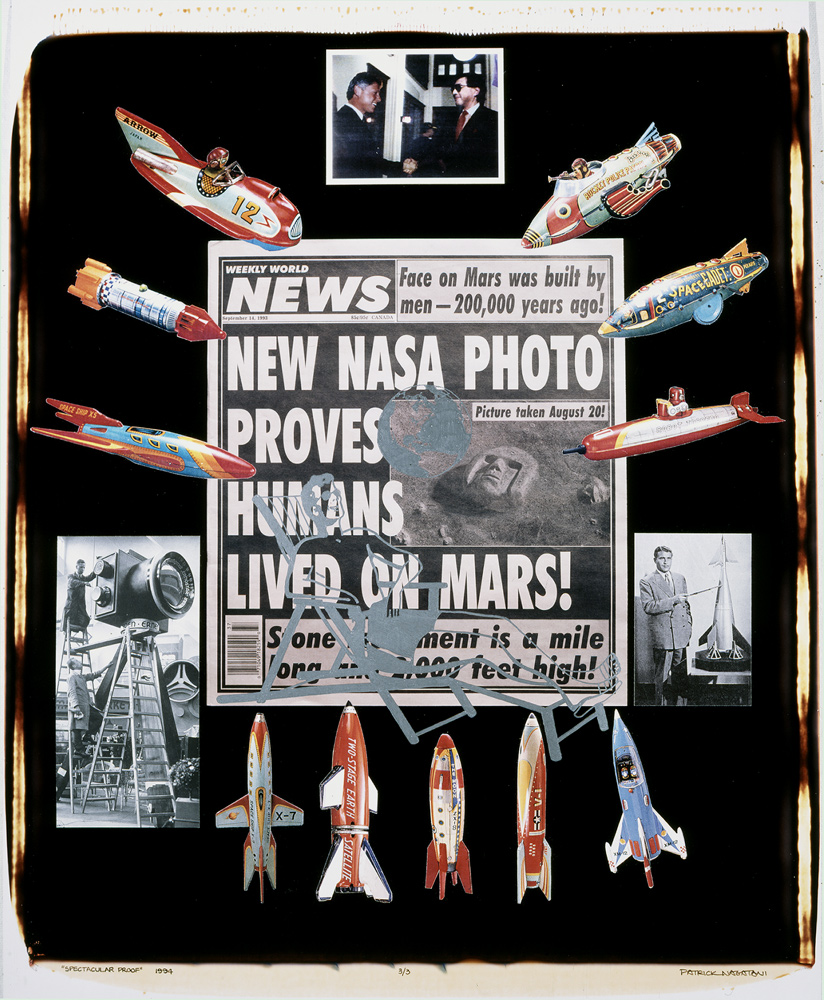
Patrick Nagatani, Spectacular Proof, 1994.
Afterimage by Matthew Rana:
Although this body of work was made over two decades ago during the high phase of postmodernism, its concerns around the way that truth is constructed resonated deeply. Its critical engagement that is, with the photographic image as a composite of interwoven narratives and suspensions of disbelief, felt timely and urgent against the backdrop of a politics increasingly stranger than fiction.

Patrick Nagatani, Amazing Image, 1994.
Like much of Patrick’s work, Novellas evokes the spectacular, media-saturated landscape of late capitalism. But unlike his better-known directorial projects, such as the collaborations between 1983 and 1989 with painter Andrée Tracey, which stage fictional scenarios in elaborate, often ambiguous tableaus, the Novellas are more collage-like in their approach. Using a variety of mediums and techniques to create densely layered compositions, they incorporate a broad range of imagery including advertisements, film stills, religious etchings and archival photographs.
As the title suggests, each image reads like fiction — a page or passage in a short story. Yet whereas Patrick’s other projects from the same period, such as Nuclear Enchantment (1988-93), Japanese-American Concentration Camps (1993-95), or Ryoichi Excavations (1985-2000), tend to cohere around a single theme, history or character, Novellas is more fragmented, and plays out on a distinctly personal register, exploring themes such as sexuality, spirituality, race and gender; symbolic anchor points of the self.
I was saddened to learn of Patrick’s passing at the age of 72, following a decade-long battle with colon cancer. As way to remember his artistic legacy and vision, I want to offer a selection of his Novellas here: a sequence of five large-format Polaroids from 1994 in which covers from the now-defunct publication Weekly World News — a supermarket tabloid known for outlandishly manipulated photographs claiming to depict supernatural and paranormal phenomena — feature. Also appearing in each image, a $5 novelty photograph in which Patrick’s head is digitally superimposed atop a figure shaking hands with then-president Bill Clinton. The dissonance that these images create still feels oddly synchronous with, for instance, the curious mix of faith and paranoia that seems to structure the American imagination at present. They are Amazing, Divine, Miraculous, Spectacular, and Terrifying.
This text has been edited, was originally published on our web journal in 2018. Afterimage is an ekphrastic series about that one image you see when you close your eyes, the one still lingering in your mind. We invite artists and writers to reflect on an image they can't shake. This column has been a part of Objektiv since our very first issue in 2010.
TOM SANDBERG
I find myself drawn to images that carry an ambiguity—a kind of visual dissonance. A story only half-told. Something has happened, and the image holds that space open. I think of Tom Sandberg’s photograph of a child with their head buried in the sand. That quiet tension, that sense of something just beyond reach.
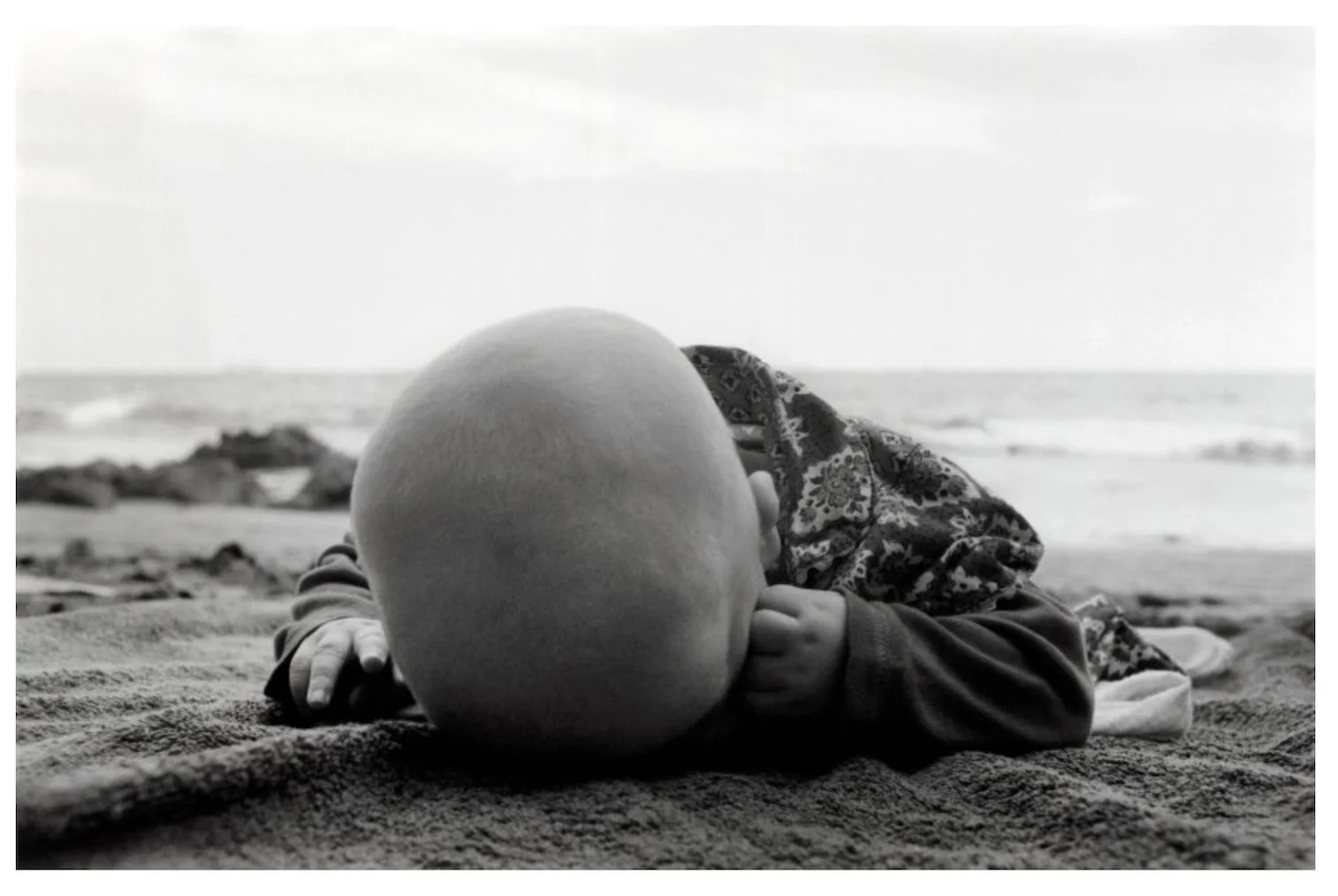
Tom Sandberg, Untitled, 2004.
Afterimage by Linnea Syversen:
I find myself drawn to images that carry an ambiguity—a kind of visual dissonance. A story only half-told. Something has happened, and the image holds that space open. I think of Tom Sandberg’s photograph of a child with their head buried in the sand. That quiet tension, that sense of something just beyond reach.
There is a photograph I keep returning to—an image by Hans Olav Forsang from his Human Tonic series. A white horse. A picture that stays with me. It is visually beautiful, yet, at the same time, unsettling. The first time I saw it, I stood still for a long time. My eyes were drawn to the horse’s eye. It looked as if it had been sewn shut or was simply missing, leaving me with many questions. Later, I learned that the horse was blind after an accident, but at the time, I didn’t know. I just stood there, thinking.

Hans Olav Forsang, from his Human Tonic series, 2017.
I have often reflected on how we humans make decisions for animals when they are injured or ill. We are the ones in power who define what a worthy life is. We speak on behalf of their silence. Perhaps this horse was perfectly fine, but in the photograph, its ears are pinned back, its nostrils flared—signs that can indicate distress. Maybe it was frightened, or maybe it was just a fleeting moment of tension. Or maybe that moment of tension was simply that—a moment. We don’t know. And that’s precisely why the image stays with me. It doesn’t give answers. It asks.
Photographs claim to capture truth, but what they offer is always just a fragment—a frozen frame that conceals as much as it reveals. They can show us reality, but not its entirety. That thought lingers with me: how quick we are to interpret what we see through the lens of our own emotions and assumptions.
This makes me think about how we perceive the unfamiliar—a disability, an injury, something outside our usual experience. We want to understand, to categorize. But there are things that resist such clarity. We project our own emotions onto what we see and what we know, but we don’t always see the full picture. Life is given, and while some can shape it, others must simply take it as it comes and as it has been given. To me, the photograph becomes more than an image of a horse. It becomes a quiet meditation on power and vulnerability. here is something about black and white. I love color—it’s a cliché to say—but perhaps black and white strips away some of the noise. It forces us to confront what is, without distraction.
Afterimage is an ekphrastic series about that one image you see when you close your eyes, the one still lingering in your mind. We invite artists and writers to reflect on an image they can't shake. This column has been a part of Objektiv since our very first issue in 2010.
TREVOR PAGLEN
There is an image of Simone de Beauvoir on my mind. It’s a composite photograph, created by blending images identified as her by facial recognition programs. The result is an AI-generated portrait: a machine’s interpretation of identity. It’s surreal, yet strangely vivid—a young version of de Beauvoir—but I remind myself that it is a photograph never actually taken, she never posed for this and yet it now exists in the world. Its subtitle, Even the Dead Are Not Safe, feels truer than ever.

Trevor Paglen, De Beauvoir (Even the Dead Are Not Safe) Eigenface, 2017. © TREVOR PAGLEN.COURTESY OF THE ARTIST AND METRO PICTURES, NEW YORK.
Afterimage by Nina Strand:
There is an image of Simone de Beauvoir on my mind. It’s a composite photograph, created by blending images identified as her by facial recognition programs. The result is an AI-generated portrait: a machine’s interpretation of identity. It’s surreal, yet strangely vivid—a young version of de Beauvoir—but I remind myself that it is a photograph never actually taken, she never posed for this and yet it now exists in the world. Its subtitle, Even the Dead Are Not Safe, feels truer than ever.
I think about this non-image as you walk through a darkened room filled with sculpted heads—disembodied forms that evoke the sensation of the dead still living among us. Like Whitney Houston on Instagram, where I see endless reels of her tragically destroying herself with drugs. Even Princess Diana is alive there, smiling conspicuously. It feels as though the dead will return to haunt us, and some should, for we didn’t do enough to protect them.
I passed Beauvoir’s grave the other day, on my way to see the house of Agnès Varda, who’s also gone. I wonder what they might make of us now. Of where we are. Of what we do. I wish I could turn back time so that the women who call themselves feminists hadn't made that ridiculous trip into space—crammed into a tiny craft, too aware of every camera. Watching them, it was as if they didn’t exist. That they weren’t really there, only creating images of themselves rather than actually living, reducing themselves to constructed, non-existent selfies.
Afterimage is an ekphrastic series about that one image you see when you close your eyes, the one still lingering in your mind. We invite artists and writers to reflect on an image they can't shake. This column has been a part of Objektiv since our very first issue in 2010.
HELMUT NEWTON
From Objektiv’s very first issue in 2010, we’ve asked a wide range of people to describe the image they can’t get out of their minds. Afterimages is an ekphrastic series about that one image that lingers behind your eyes—the one that won’t let go. We invite artists and writers to reflect on an image they can’t shake. This column has been part of Objektiv since the beginning, originally titled Sinnbilde in Norwegian. As the sea of images continues to swell, the series asks: which visuals linger and take root in today’s endless stream? Much like a song that plays on repeat in your head, these images stick. Whether it’s a billboard glimpse, a newspaper portrait, a family photo, or an Instagram reel—we’re drawn to those fleeting moments that stay with us.

Afterimage by Nina Strand:
There’s a still in the film about Yves Saint Laurent—he’s in his studio at 5 Avenue Marceau, sketching a dress. I can’t remember whether I saw it in the nine-minute film about his life, shown in a small projection room at the Musée Yves Saint Laurent, or in the one projected on the wall as I stood in his studio, completely awestruck to be in the very room where he created those empowering vêtements. He draws with such ease and precision, and it’s clear how deeply he believed in the power of clothes to transform a woman.
I'm at the museum with my friend, whom I’ve known since high school. We’d just come from the Palais Galliera, where she said she could spend hours, showing me the hand-sewn garments and explaining how long they took to make, pointing out the sewing needles still resting on the late designer’s desk. I’ve never been especially interested in the history of clothing—but that’s about to change. We don’t know it yet, standing here at YSL, but by the end of the day, luck will take us to Atelier 1900 – Cygne Rose, where we’ll meet la propriétaire, who we later learn is also involved with the Musée de la Femme. There, visitors can explore the lives of 18th- and 19th-century women through antique dresses, costumes, textiles, and accessories.
Right now, in this room where Yves actually worked, I can’t help but think of Helmut Newton’s photograph of a woman standing in a Marais street, wearing Le Smoking—shot for a Vogue series. That image became iconic, inspiring a revolution in the social codes of its time. Newton and, certainly, the designer both imagined a detached, powerful, liberated woman—wearing a tuxedo once reserved solely for men.
The fact that one day in Paris—a fashion metropolis—showed me how the lineage of women’s clothing is interwoven with the history of liberation has transformed me.
On the Afterimages:
Objektiv Press celebrates 15 years this April. Founded in 2009 as a gallery in journal format, Objektiv began as a biannual publication dedicated to lens-based art. After a decade of exploring this format, we transitioned to a more book-like publication—inviting a single writer to fill the pages with their real and raw opinions on various trends within the medium.
Since 2020, we’ve invited a range of voices—photographers, critics, curators—to reflect on their relationship with photography through longer essays. Our aim is to deepen our content and continue exploring the development and role of film and photography, both within the art world and in society at large.
From Objektiv’s very first issue in 2010, we’ve asked a wide range of people to describe the image they can’t get out of their minds. Afterimages is an ekphrastic series about that one image that lingers behind your eyes—the one that won’t let go. We invite artists and writers to reflect on an image they can’t shake. This column has been part of Objektiv since the beginning, originally titled Sinnbilde in Norwegian. As the sea of images continues to swell, the series asks: which visuals linger and take root in today’s endless stream? Much like a song that plays on repeat in your head, these images stick. Whether it’s a billboard glimpse, a newspaper portrait, a family photo, or an Instagram reel—we’re drawn to those fleeting moments that stay with us.
We encounter so much each day—what does it do to us? According to Phototutorial, by 2025, humanity will take approximately 2.1 trillion photos. In the Western world, we may snap 20 photos a day, while the average person, immersed in a media-saturated environment, is likely to see between 4,000 and 10,000 images daily.
Several contributions offer fresh perspectives on these visual imprints, inviting valuable reflections on what photography can be, and how we interpret images today. Art criticism is subtly woven through many of the texts. Most people responding to our question about afterimages have found visuals that echo their thoughts or emotions. Many texts explore seeing oneself through an image—literally and metaphorically. This includes self-portraits, mirror images, or how an image can stir something deeply personal or existential. Old photographs, childhood memories, grandparents, and lost moments are recurring themes. The image becomes a vessel of time—or frozen time.
One afterimage emerged when an art historian fed a sentence from The Songs of Maldoror by Comte de Lautréamont into an image generator: “...like the random collision of a sewing machine and an umbrella on a dissection table!” The output included an umbrella and a sewing machine, but also an unexpected object: a medical chair, draped in what looked like a surgeon’s gown, with a metal bowl on top. It had taken the thought a step further.
Many contributors share reflections, ekphrases, and use images as gateways into something personal:
A gallery owner describes a photo she would love to own—of a drink on a plane taking her away from daily life.
An artist reflects on the unsettling image of Pogo the Clown, and how a clown can appear so evil.
An author discusses a photo of a sick Helmut Newton, which we couldn’t publish. Instead, we photographed the book where the image appeared and referenced it.
The Danish Minister of Culture recalls an image of a public servant buried under a mountain of documents.
An author reflects on a photo from Utøya, July 22nd. We did not publish the image at his request—the description alone was haunting enough: lifeless bodies.
An artist speaks of the sisters from Gaza, captured in a video still, the eldest carrying the youngest.
A photo editor remembers an image of a son setting out to sea for the first time since his father drowned—an image that continues to haunt him.
I believe this series has lasted fifteen years because we need space to talk about everything we’ve seen—and to process our impressions. It endures, too, because it is democratic. All images are welcome.
Many texts dwell on what is no longer there. Loneliness and longing often emerge—sometimes more than you might initially notice. These images act as mirrors: we don’t just see their subjects, but also our own grief, dreams, and anxieties.
GRACIELA ITURBIDE
Later, I wrote a thesis using Roland Barthes’ idea of the punctum in an image, exploring how this was my first encounter with such a punctum. It became an image that is very dear to me; I’m still captivated by it many years later, and it continues to evoke strong emotions for me.

Graciela Iturbide, Carnival, Tlaxcala, Mexico, 1974.
Afterimage by Pauline Koffi Vandet:
I saw this many years ago, and it still gives me goosebumps. After high school, I took a year-long sabbatical and was in London, where my interest in art—especially photography and new media—began. I have this image to thank for that. I was at Tate and came across a retrospective exhibition of the artist Graciela Iturbide. As I entered one of the rooms filled with many photographs, this one stood out. I can’t quite say what it was, but it was visually captivating in a way that immediately caught my attention. I couldn’t figure out exactly what it was that captured me.
Later, I wrote a thesis using Roland Barthes’ idea of the punctum in an image, exploring how this was my first encounter with such a punctum. It became an image that is very dear to me; I’m still captivated by it many years later, and it continues to evoke strong emotions for me. I think this is because it’s so uncanny: the mask is human-like, yet not entirely. It appears to be a person in a carnival suit. To me, it is a genderless or perhaps genderfluid being, and from my perspective it could be either living or non-living. There’s something deeply alluring about it. The plain background, which doesn’t compete with the figure, helps focus attention on the masked being.
This photograph is an acknowledgment of the deeply personal and non-universal nature of Barthes’ punctum to me. While many walked past it, it absorbed me and has never let me go.
Afterimage is an ekphrastic series about that one image you see when you close your eyes, the one still lingering in your mind. We invite artists and writers to reflect on an image they can't shake. This column has been a part of Objektiv since our very first issue in 2010.