SANLÉ SORY
Our work grew out of an ongoing research into the image, approached as a space for exploring Black and African visual cultures. Since 2010, we have been collecting photographs, videos, and other visual materials, guided by the intuition that images can function not only as documents, but as tools for knowledge, reflection, and transmission.
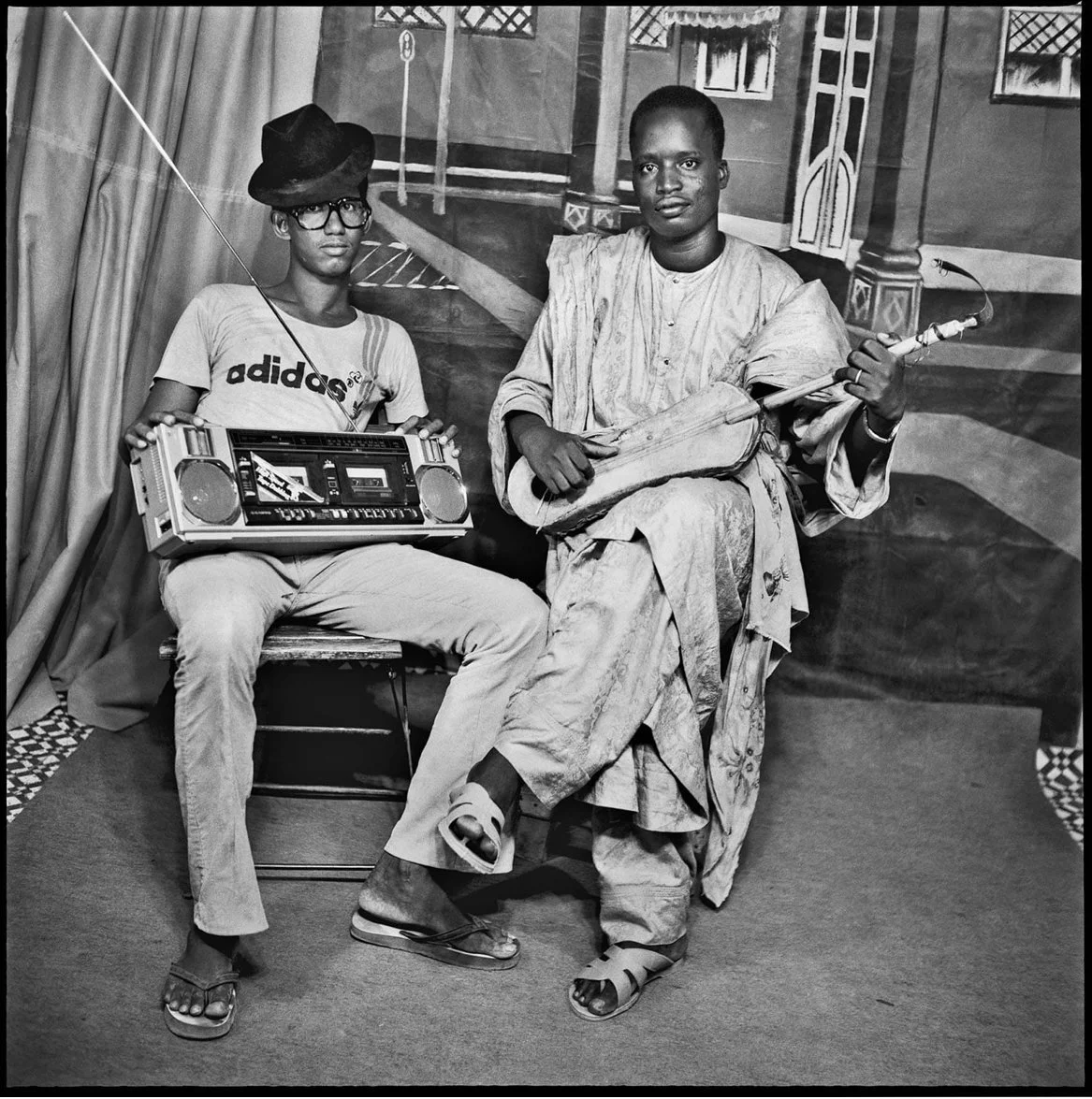
Sanlé Sory, Mali Djeli, 1984, Yossi Milo Gallery, © Sanlé Sory
Afterimage by Aurélia Niat Toundji & Salwat Idi:
(English text followed by the French original.)
Our work grew out of an ongoing research into the image, approached as a space for exploring Black and African visual cultures. Since 2010, we have been collecting photographs, videos, and other visual materials, guided by the intuition that images can function not only as documents, but as tools for knowledge, reflection, and transmission.
As this initial research resonated with a wider audience, we chose to structure and deepen our approach. In 2018, this process expanded into publishing, as a way of sharing our research and giving editorial form to our commitment to archives and visual thinking.
We are Aurélia Niat Toundji and Salwat Idi, founders of manufactoriel, a research studio working across four interconnected fields: research, publishing, design, and transmission. Our practice includes physical and digital archiving projects, critical research, collaborations with cultural institutions and brands, and public engagement through workshops, commissions, and curatorial projects.
Through our editorial platform, cahiers manufactoriel, we explore contemporary African and Black visual cultures, art, and style from a critical perspective. We approach research as an artistic process, where the relationship between content, the materiality of the book, and its spatial form is central. Publishing becomes a site for creation, experimentation, and critical inquiry.
At the core of our practice is the belief that knowledge can be conveyed through images — a form of visual epistemology.
In many African societies, knowledge has long been transmitted through orality, metaphor, and storytelling, as well as through visual and symbolic forms embedded in cultural practices. Our work continues this lineage by connecting visual research, symbolic thought, and knowledge production, in order to explore alternative ways of understanding and sharing ideas.
While building our curatorial database, we encountered numerous challenges: fragmented sources, vanished websites, inaccessible archives. These obstacles strengthened our commitment to collecting, preserving, and materializing images, in order to safeguard a tangible and lasting visual memory.
One emblematic example of this approach is a studio portrait taken by Sanlé Sory in Mali in the 1980s. The photograph shows two young men seated side by side. One wears a traditional boubou and holds a ngoni, an emblematic West African string instrument; the other adopts a hip-hop aesthetic, striking a b-boy pose while holding a boombox — a direct dialogue between local traditions and global influences.
The image speaks to musical transmission, dress, and the coexistence of tradition and modernity. It also opens onto broader sociological questions: how images make cultural and structural tensions visible, and how they allow us to understand ways of being, self-representation, and belonging.
Through this photograph, Mali Djeli (1984) by Sanlé Sory, we reflect on the image’s capacity to produce meaning around society, identity, style, and the body. It shows how cultural practices circulate and transform, shaping both individual and collective identities, while revealing generational differences and overlapping cultural temporalities.
In bookshops, libraries, and cultural institutions, we repeatedly encountered a lack of literature on contemporary African art and the visual cultures of the diaspora. This absence led us to produce this knowledge ourselves.
Our work engages with these visual cultures by affirming the image as a tool for critical and artistic research. Since 2018, we have been publishing books drawn from archival research, documenting, preserving, and valuing these images, so that visual and cultural memory remains accessible and continues to inspire new forms of research and creation.
En français: Notre travail est né d’une recherche autour de l’image, envisagée comme un champ d’exploration de la culture visuelle noire et africaine. Dès 2010, nous avons commencé à rassembler des photographies, des vidéos et différents supports visuels, portées par l’intuition que l’image pouvait constituer en elle-même un outil de connaissance, de réflexion et de transmission.
Face à l’écho rencontré par cette première phase de recherche, nous avons choisi de structurer cette démarche afin d’en approfondir les enjeux. En 2018, cette dynamique s’est prolongée par la volonté de publier le fruit de nos recherches et de donner une forme éditoriale à notre engagement pour l’archive et la pensée visuelle.
Nous sommes Aurélia Niat Toundji et Salwat Idi, et nous dirigeons manufactoriel, un bureau de recherche dont la pratique s’articule autour de quatre axes : la recherche, la publication, le design et la transmission. Nous développons des projets d’archivage physique et numérique, des recherches critiques, des collaborations avec des institutions culturelles et des marques, et activons notre travail à travers des ateliers, des commandes et des projets curatoriaux.
À travers notre plateforme éditoriale, cahiers manufactoriel, nous proposons une approche critique de la culture visuelle contemporaine africaine et noire, de l’art et du style. Nous concevons la recherche comme un processus artistique et poïétique, dans lequel le dialogue entre le contenu, la matérialité et la spatialité du livre est central. L’édition devient ainsi un espace de création, d’expérimentation et de pensée critique.
Notre démarche repose sur le constat que la connaissance peut se transmettre par l’image; ce que nous abordons comme une forme d’épistémologie visuelle.
Dans de nombreuses sociétés africaines, le savoir se transmet par l’oralité, la métaphore et la parabole, mais aussi par des formes visuelles et symboliques profondément ancrées dans les pratiques culturelles. Notre démarche s’inscrit dans cette continuité en articulant recherche visuelle, pensée symbolique et production de connaissances, afin d’explorer d’autres modes de compréhension et de transmission des idées.
Dans la constitution de notre base de données curatoriale, nous avons été confrontées à de nombreuses limites : sources fragmentaires, sites Internet disparus, archives inaccessibles. Ces obstacles ont renforcé notre volonté de collecter, conserver et matérialiser les images, afin de préserver une mémoire visuelle tangible et durable.
Un exemple emblématique de cette démarche est un portrait studio réalisé par Sanlé Sory au Mali dans les années 1980. La photographie représente deux jeunes hommes assis côte à côte : l’un, vêtu d’un boubou traditionnel, tient un ngoni, instrument à cordes emblématique d’Afrique de l’Ouest ; l’autre adopte une esthétique hip-hop, affirmant une posture de b-boy et tenant un boombox, dans un dialogue direct avec les traditions locales.
Cette image met en lumière la transmission musicale, les styles vestimentaires et la coexistence entre tradition et modernité. Elle interroge également des dimensions sociologiques plus larges : la manière dont l’image rend visibles des tensions culturelles et structurelles, et comment elle permet d’appréhender des façons d’être, de se représenter et de se situer dans le monde.
À travers cette photographie, Mali Djeli (1984) de Sanlé Sory, nous interrogeons la capacité de l’image à produire du sens autour de la société, des identités, du style et de la corporéité. Elle montre comment des pratiques culturelles circulent, se transforment et participent à la construction d’identités individuelles et collectives, tout en révélant des différences générationnelles et des temporalités culturelles multiples.
En fréquentant librairies, bibliothèques et institutions culturelles, nous avons constaté le manque de littérature sur l’art africain contemporain et les cultures visuelles de la diaspora. Cette absence nous a poussés à produire nous-mêmes ces savoirs.
Notre travail explore ces cultures visuelles en affirmant l’image comme outil de recherche critique et artistique. À partir des archives, nous éditons depuis 2018 des livres pour documenter, conserver et valoriser ces images, afin que la mémoire visuelle et culturelle reste accessible et continue d’inspirer de nouvelles recherches et créations.
Afterimage is an ekphrastic series exploring that one image you see when you close your eyes — the one that lingers in your mind. We invite different people to reflect on an image they can't shake. The column began during our time publishing the journal Objektiv and continues today under Objektiv Press.
JAMES VAN DER ZEE
There are many aspects of this photograph that draw me to it. I like to think about the process of looking. When I look at something, I follow my feelings. I want what I see to move me, usually in a layered way. I also want complexity, because it makes me want to look longer and reflect. When I looked at this picture again, I understood why I loved it so much—it resonates with my subject matter. Looking at it now, with my 45-year-old eyes, in a world burning in many ways, and with a deeper understanding of myself and my work, I realize that this photograph makes me feel safe. In a time when everything feels confusing, this photograph feels clear—like a statement. I feel devoted to it. I admire it. I feel included in it, and I feel protected by it, with a sense of safety.
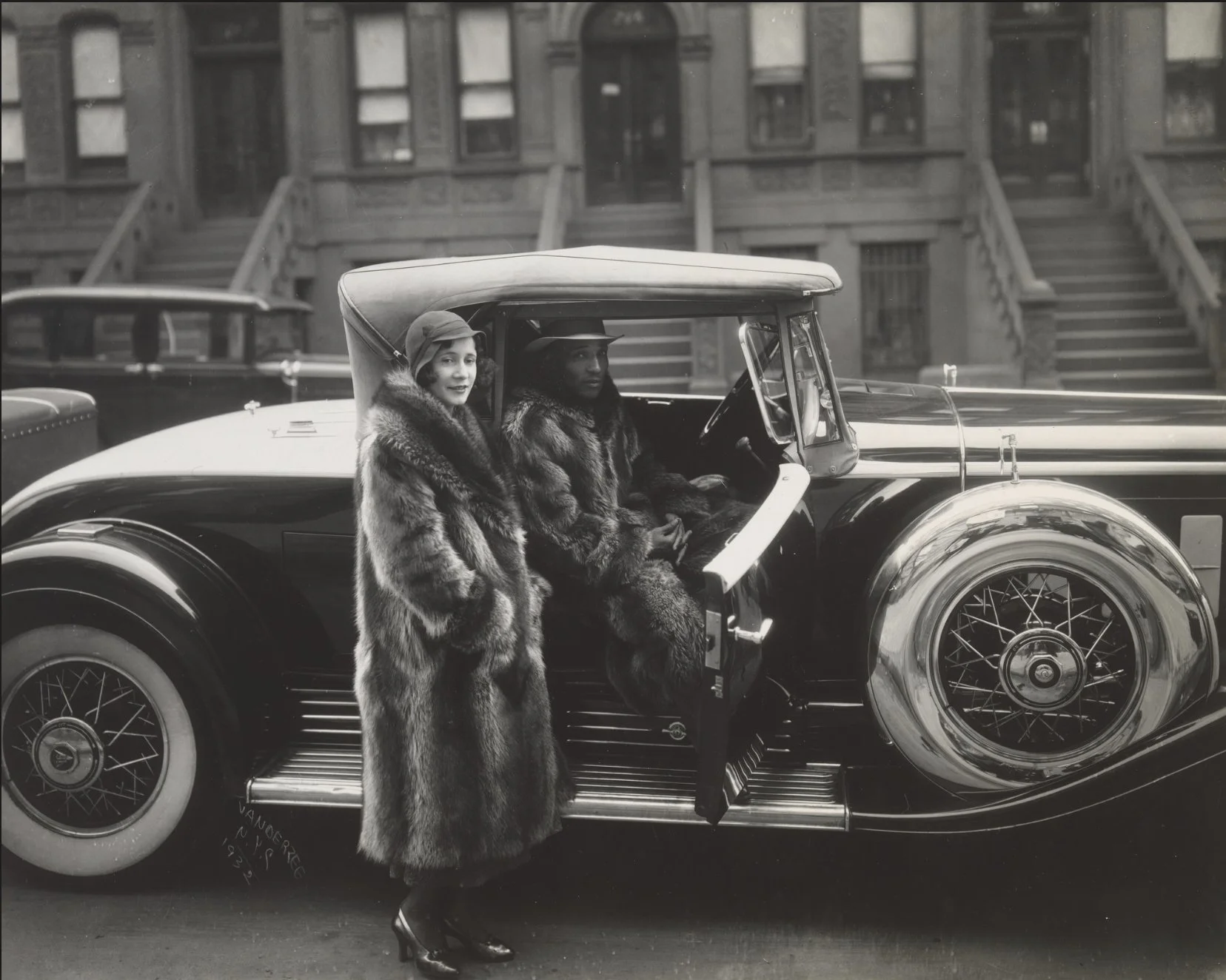
James Van Der Zee, Couple, Harlem 1932, © 2026 Estate of James Van Der Zee. www.moma.org Acquired through the generosity of Richard E. and Laura Salomon.
Afterimage by Nydia Blas:
I think it’s my all-time favorite photograph. When I was asked about Afterimage, this came straight to my mind. It feels like it’s been in my head forever, but I probably became more familiar with it during graduate school in 2013. By chance, I realized that I had taken a photograph that kind of spoke back to this one, without realizing they were in conversation. That moment of connection is one of the reasons I’m drawn to photography in general: its ability to speak across generations and time, still remaining relevant. Everything we’ve ever seen is somewhere in our minds, and we never know when we might reference it, be reminded of it, or recall it creatively. That’s one of the things I find fascinating about photography. I’ve never exhibited this photo.
I’m from New York, and in 2016, while visiting Atlanta—where I now live—I was at the High Museum. I turned a corner and saw this photograph in a frame. It surprised me to encounter it in person after having seen it so many times on a screen. That was a beautiful moment. The image doesn’t change, but we do in relation to it. I have changed and grown since I first looked at it. Even my worldview and thoughts are constantly expanding. It’s interesting to think about time: the photograph was taken during an important, powerful, and moving period, yet we find ourselves in similar moments again.
There are many aspects of this photograph that draw me to it. I like to think about the process of looking. When I look at something, I follow my feelings. I want what I see to move me, usually in a layered way. I also want complexity, because it makes me want to look longer and reflect. When I looked at this picture again, I understood why I loved it so much—it resonates with my subject matter. Looking at it now, with my 45-year-old eyes, in a world burning in many ways, and with a deeper understanding of myself and my work, I realize that this photograph makes me feel safe. In a time when everything feels confusing, this photograph feels clear—like a statement. I feel devoted to it. I admire it. I feel included in it, and I feel protected by it, with a sense of safety.
When I think of James Van Der Zee, a photographer popular during the Harlem Renaissance, I appreciate how he created a record, or counter-narrative, to the stereotypes about Black people at the time. In his photographs, the subjects—most often Black Americans—and the locations and clothing (what I like to call costumes) serve as markers for other things, like status. The car functions as a prop and feels powerful because it takes up almost the entire frame. It cuts through, making the subjects important. They feel safe. The light is very soft, and the car door is open just enough to welcome me into that space. These people seem to be inviting the viewer into an important space.
Afterimage is an ekphrastic series about that one image you see when you close your eyes, the one still lingering in your mind. We invite different people to reflect on an image they can't shake. This column has been a part of Objektiv since our very first issue in 2010.