TIAGO BOM ON JEAN ROUCH
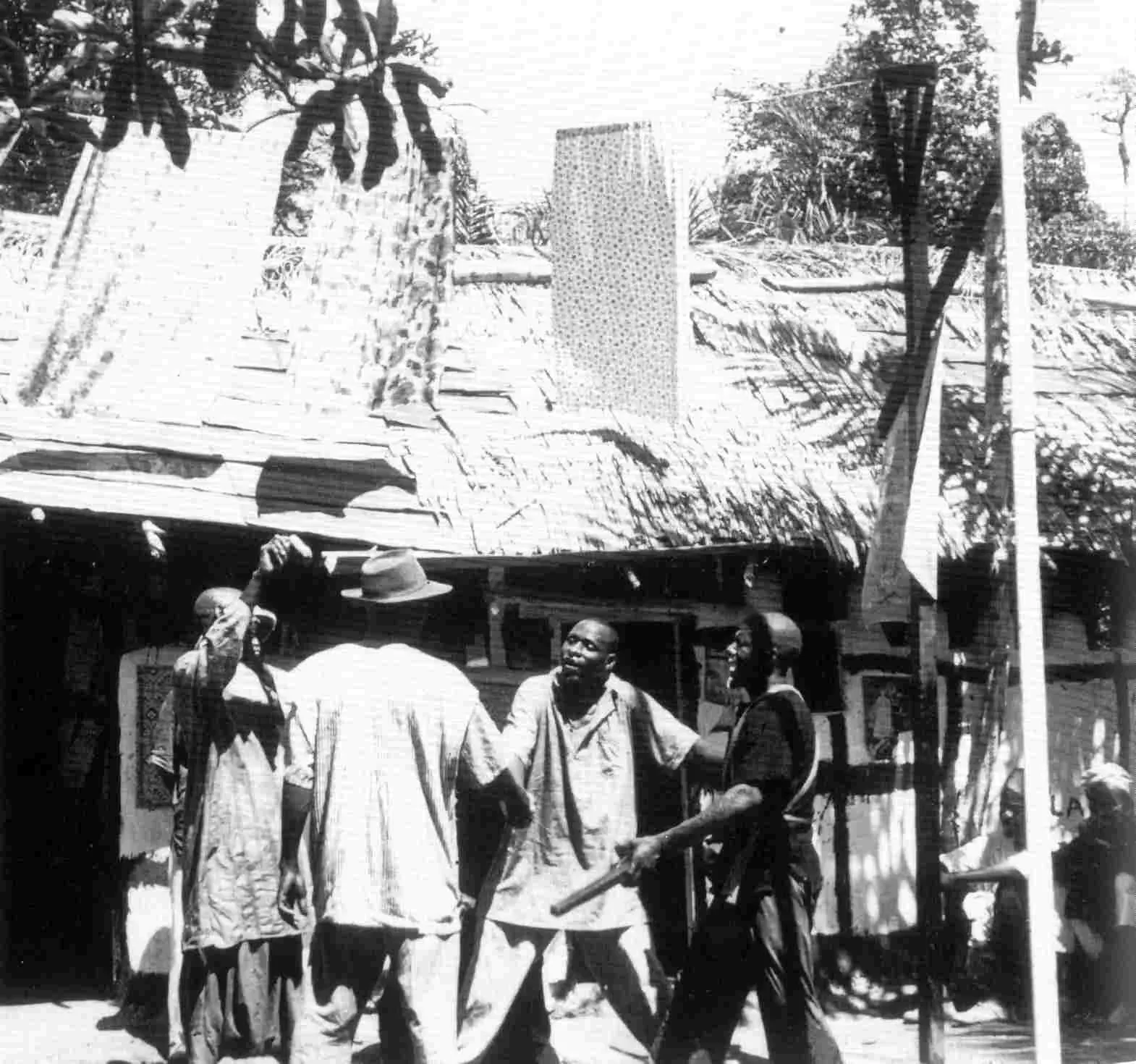
© Jean Rouch, Les Maîtres fous, 1958. Les Films de La Pléiade
Afterimage by Tiago Bom:
Images from the film Les maîtres fous by the French filmmaker and anthropologist Jean Rouch have been on my mind recently. I find Rouch interesting because he started as a documentarian making anthropological films but later began making ethno-fiction. In Les maîtres fous, as far as I know this film is documentary, participants enter trance-like states in ritual performances in Ghana, where they dress as colonial authorities, mimicking their gestures and violence, while also channeling spirits. They sometimes imitate dogs—crawling, barking, and howling—and actual dogs appear in the ceremonies, adding to the chaotic, transgressive energy. The performances are a mix of possession, music, dance, and symbolic reenactment, creating a visceral exploration of power, oppression, and ancestral memory.
The images I am thinking about are very context-driven, as I am currently preparing to go on a small residency in São Tomé e Príncipe to shoot a film, curiously, in part about dogs.
Portuguese sources from the time state that it was an uninhabited archipelago, and that the Portuguese used it to grow exportable crops and as a testing ground and base for the Trans-Atlantic slave trade. As with any colonial enterprise at the time, it became, I think for centuries, one of the biggest producers of coffee and chocolate in the world.
The people who were sent there were mainly from Angola (another former Portuguese colony), and in smaller percentages from places like the Congo. I read somewhere that in Haiti there was a similar Central and West African population. Maybe that is why you find similar African syncretism, akin to voodoo, in São Tomé e Príncipe, much like in Haiti. Coincidentally, alongside Haiti—and I don’t know which came first—these were the only two places in the world where there were slave revolts that managed to take over and form their own communes.
São Tomé e Príncipe also has a unique cultural tradition called Tchiloli, a public theatrical performance combining music, dance, and drama, rooted in a 16th‑century Portuguese play about Charlemagne, adapted and creolized over the centuries. Performers wear colonial-style costumes and masks, creating a symbolic cultural tradition. It is kind of eerie: people who are descendants of slaves and colonized peoples putting on the white face, carrying the memory of a centuries-old ritual, metabolizing and transforming a tradition that started with their colonizers.
This performative aspect and the ritualized mimicry reminded me of Les maîtres fous. I’m not sure the conceptual depth translates in a still, but I haven’t been able to shake that film ever since I saw it.
Afterimage is an ekphrastic series about that one image you see when you close your eyes, the one still lingering in your mind. We invite different people to reflect on an image they can't shake. This column has been a part of Objektiv since our very first issue in 2010.