Afterimage by Bryson Rand:
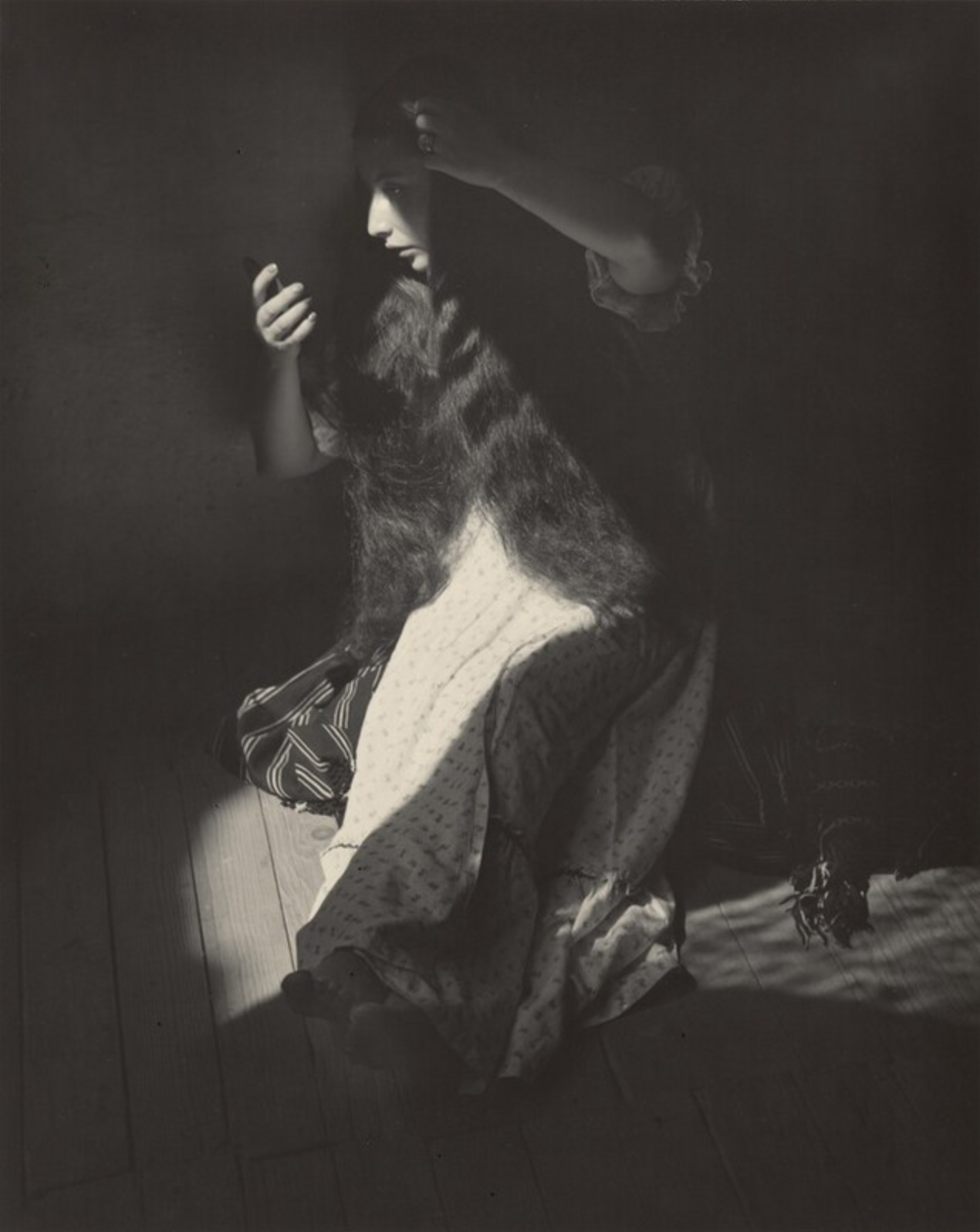
Manuel Álvarez Bravo, Retrato de lo Eterno (Woman Combing Her Hair), 1932-1933, printed 1977.
I've been torn between two images that have been stuck in my head, and I just can’t decide. The first one that came to mind was a photograph by Manuel Álvarez Bravo, a portrait of a woman brushing her hair at the mirror. I was in Toronto over the summer, and there was a show on Latin American photography where this picture was included. It's an image I've known for as long as I've been making photos, about 30 years. Every time I see it in a book or elsewhere, I think it is incredible. About a month before, I made a picture while my husband and I were in Mexico with a similar diagonal light, and I realized this picture has always been in my head. Everything fell into place. I feel like this image is the root of my practice in a way: the way I think about light and shadow, gesture, and photography’s ability to transform a mundane moment into something transcendent. This picture has everything I love about photography: the description of her hair, the watery light behind her, the triangle of light on her face—it’s all just… perfect.
It was interesting to have that revelation. If you had asked me about my influences, I would have said Peter Hujar, Nan Goldin, the list goes on. But I’m not sure that particular photograph would have been the first thing out of my mouth. Seeing it and making the connection with the picture I took in Mexico, I’ve just been returning to it again and again. I’ve even been showing it to my students too. I think they got tired of me last semester because I kept referencing it in lectures and critiques: "Back to Manuel Alvarez Bravo…" And they’d say, "You’re obsessed with this picture!" But I just can’t get it out of my head.
The other image is a photograph my friend Patrice Helmar made in 2020. They recently showed it, in summer 2024 at PARTICIPANT INC gallery. They created a series of self-portraits during the COVID lockdown after returning to Alaska. Stuck there for over a year, they started making portraits every day with a large-format camera. One picture shows Patrice in front of an old tanker, nude, with their dog Dolly, a Pomeranian-Chihuahua mix, sitting next to them. Patrice wears a balaclava, connecting to a character or persona they were exploring.
I saw the series and was struck by the generosity of it all, the vulnerability, but also the way it reflects what we all were going through. None of us knew what was happening; many of us were paralyzed with fear. I think Patrice just felt they had to make the work. There’s an almost crazed energy to the series, but this particular image feels grounded, embodied, present. I saw it in the show, a large print in the back of the gallery, and I just started crying. It was incredible.
This image reminds me of something I teach my students: take chances. If you have an idea, do it. Don’t overanalyze, pick up your camera and see what happens. That level of risk is where the generosity comes from. And that connects back to the Manuel Alvarez Bravo image. Both pictures speak to the generosity of photography: the willingness of someone to pose, or to put yourself in front of the camera. There’s a deep humanity in both images that floors me every time.
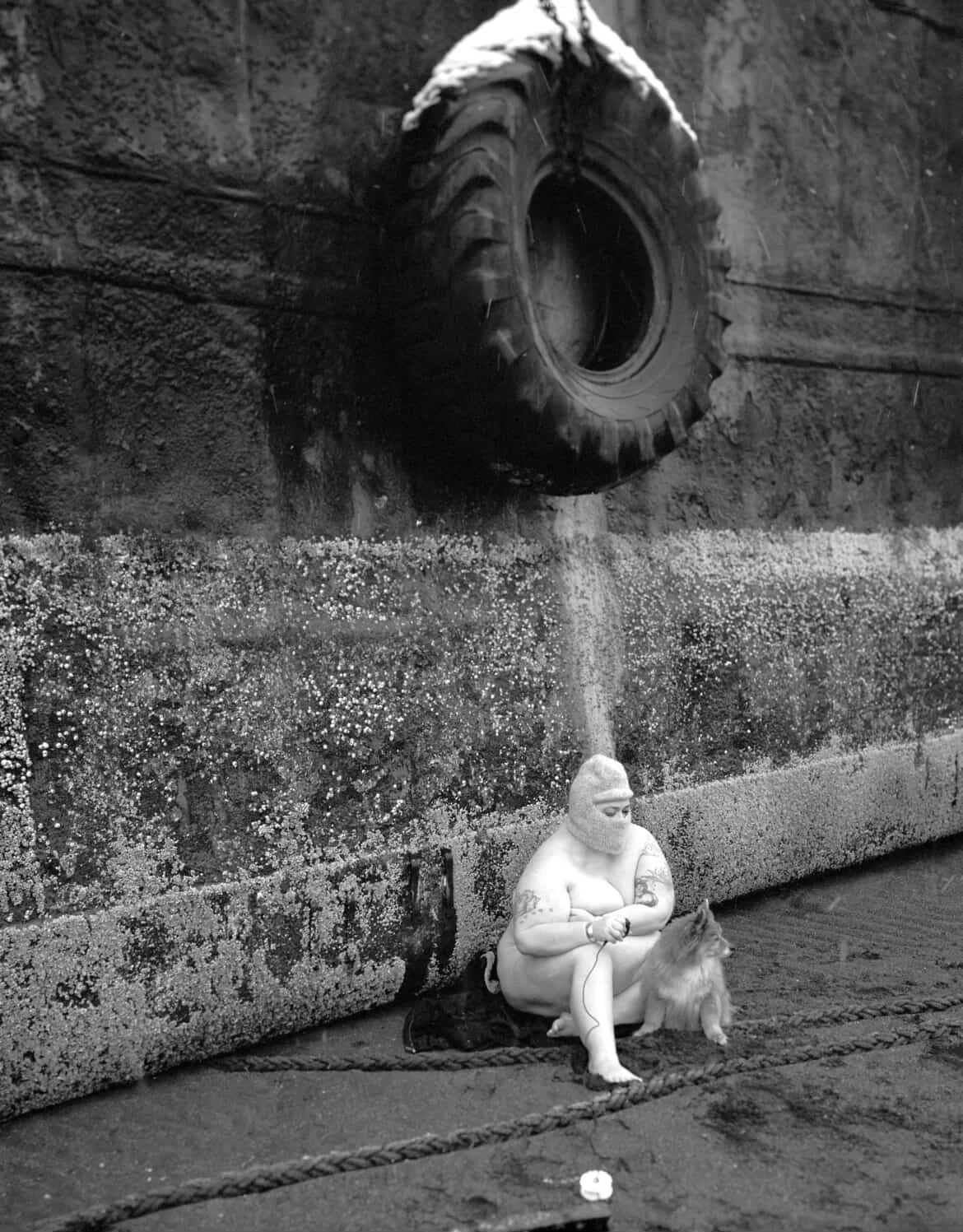
Patrice Aphrodite Helmar, Tanker, 2020. Gelatin Silver Print, 60x48 in.
I always ask myself, and my students, what part of your humanity are you putting into your work? All art is an expression of some aspect of humanity. It doesn’t have to be directly about your body or lived experience, but whatever your mind or imagination produces, it’s coming from you. That generosity is so important, especially today, when it feels increasingly rare.
These images stay in my mind because they offer a kind of respite. They provide moments for others to shift their attention, even briefly. As an artist, sometimes I feel like "The world is on fire, and I’m making my silly pictures." But seeing work like this reminds me it does matter.
I also look to artists from the past for guidance, particularly those responding to crises. So much of my practice is influenced by artists living through the AIDS crisis of the ’80s and ’90s. How did they stay politically and culturally engaged while also creating work that was beautiful or peaceful? That act of creation can be deeply healing. Patrice’s photo exemplifies that. Making the series, putting the show together, it seemed like an act of healing. The dog in their series, Dolly, adds another layer. People might call photos of pets "cheesy," but it’s beautiful, a true relationship captured. I have two dogs myself and would be lost without them. There’s also a generosity in showing that connection that resonates with me.
Photography can heal. It communicates in ways words sometimes cannot. That picture stopped me in my tracks; so much was being conveyed. I can’t fully articulate it, but I can deeply appreciate it.
Afterimage is an ekphrastic series exploring that one image you see when you close your eyes—the one that lingers in your mind. We invite different people to reflect on an image they can't shake. The column began during our time publishing the journal Objektiv and continues today under Objektiv Press.