LUCAS BLALOCK
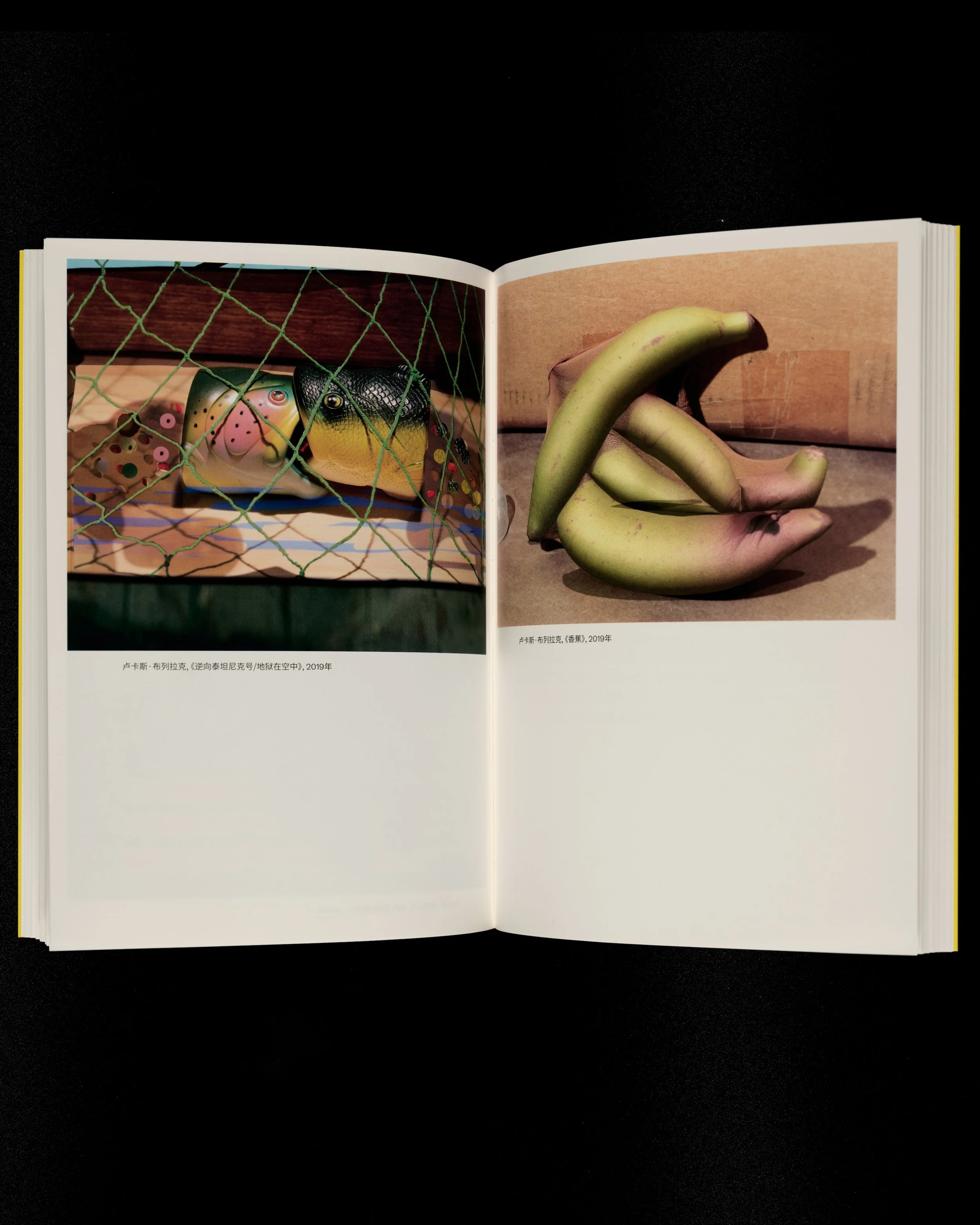
41. Of all the ideas I took from painting, the crucial one was probably that new attempts in painting are inevitably in conversation with the whole history of painting. Painting is a kind of collective project. A photograph is often more related to its subject than it is to other photographs, and I wanted to know if I could get them to lean the other way or at least stand upright on the fence.
My research as an artist is in novel readings of accumulated data, in refiguring some of what was left out. I’m looking at the world around me through the camera while simultaneously feeling a desire to put it in conversation with all this other material.
The philosopher of science, Thomas Kuhn, writes in The Structure of Scientific Revolutions about what he calls “normal science.” Normal science posits that in most moments the best scientist is the one who measures the most accurately. Kuhn believes science relies on the idea that most aberrant data is basically bad measuring. But every once in a long while, someone—the necessary scientist, a Newton or Einstein—looks at that aberrant data and sees a new pattern, and that new pattern replaces the old one. Both normal and necessary science have an analogue in making art.
A text from Lucas Blalock's Why Must the Mounted Messenger Be Mounted? to celebrate the book's release in Mandarin!