GEM FLETCHER ON GENESIS BÁEZ
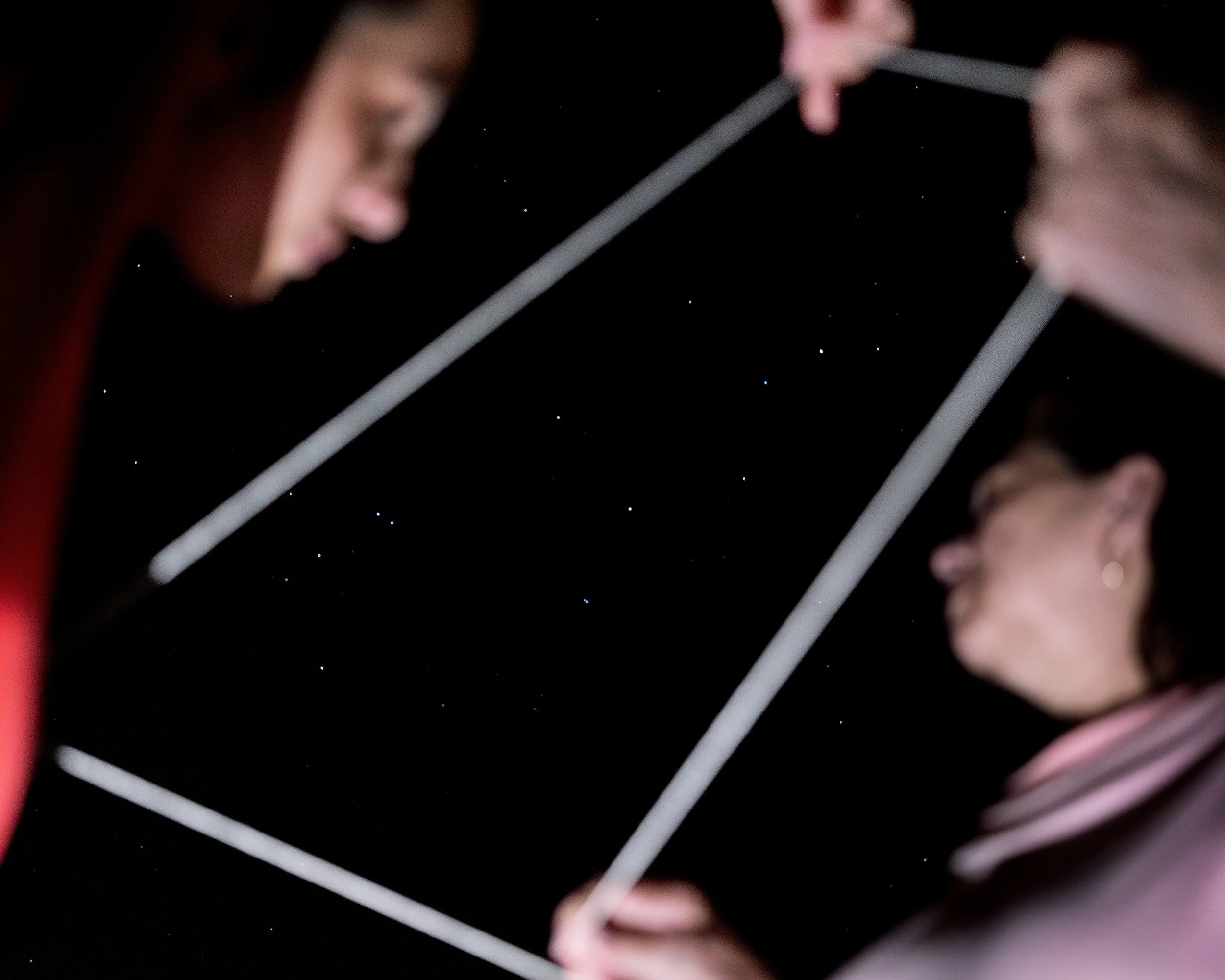
Genesis Báez, Constellation, 2024-2025.
So much of my energy, of late, has been focused on this sense of feeling between two [photographic] worlds. The former is organised by truth, fact and information - a society built upon the premise that image=evidence. The new image world has the ability to conjure realness untethered from reality, a place where a compelling image matters more than any indexical truth and where images have the potential to usher in new realities.
I’m embarrassingly late to Genesis Báez's work, first encountering it in March 2025 after watching an episode of Session Press Photobook club from Dashwood Books, where she participated in an open and layered conversation with Justine Kurland [the two first met during a critique at Yale] about her debut monograph, Blue Sun / Sol Azul, created with Capricious. The book, which spans a decade of photographic work, offers a glimmering examination of matriarchal kinship and diaspora through studied images of the elemental and generational.
It was during that talk, watched via my iPhone on the train, that I saw Báez’s remarkable image Constellation. The image features the artist and her mother mapping the sky with string, framing the cosmos and together flattening the distance between earth and sky. Shot from below, the photograph has soft, cloud-like edges that create a corporeal sense of being physically pulled up into the image and beyond.
“We are so accustomed to thinking of photographs as 'moments' that are 'captured,” Báez told me when I later spoke to her about the work. “But I am interested in the ways that photographs can be like water: unfixed, describing our permeability, and suggesting how we are all interconnected.”
Constellation, and many of the images in Blue Sun / Sol azul caught me off guard. Still now, a year on, I’m haunted by that image and its sensorial possibilities. Using photography in unexpected ways to adequately express the strange, emotional, and unmapable shape of our present is exactly what I’d been craving from the medium that too often sits in the literal and didactic. What is remarkable about Báez’s work is how she returns the joy of looking back to the viewer—something that often feels lost in the daily grind of relentless doomscrolling.
Afterimage is an ekphrastic series exploring that one image you see when you close your eyes—the one that lingers in your mind. We invite different people to reflect on an image they can't shake. The column began during our time publishing the journal Objektiv and continues today under Objektiv Press.