NINA STRAND ON ANDRE KERTÉSZ
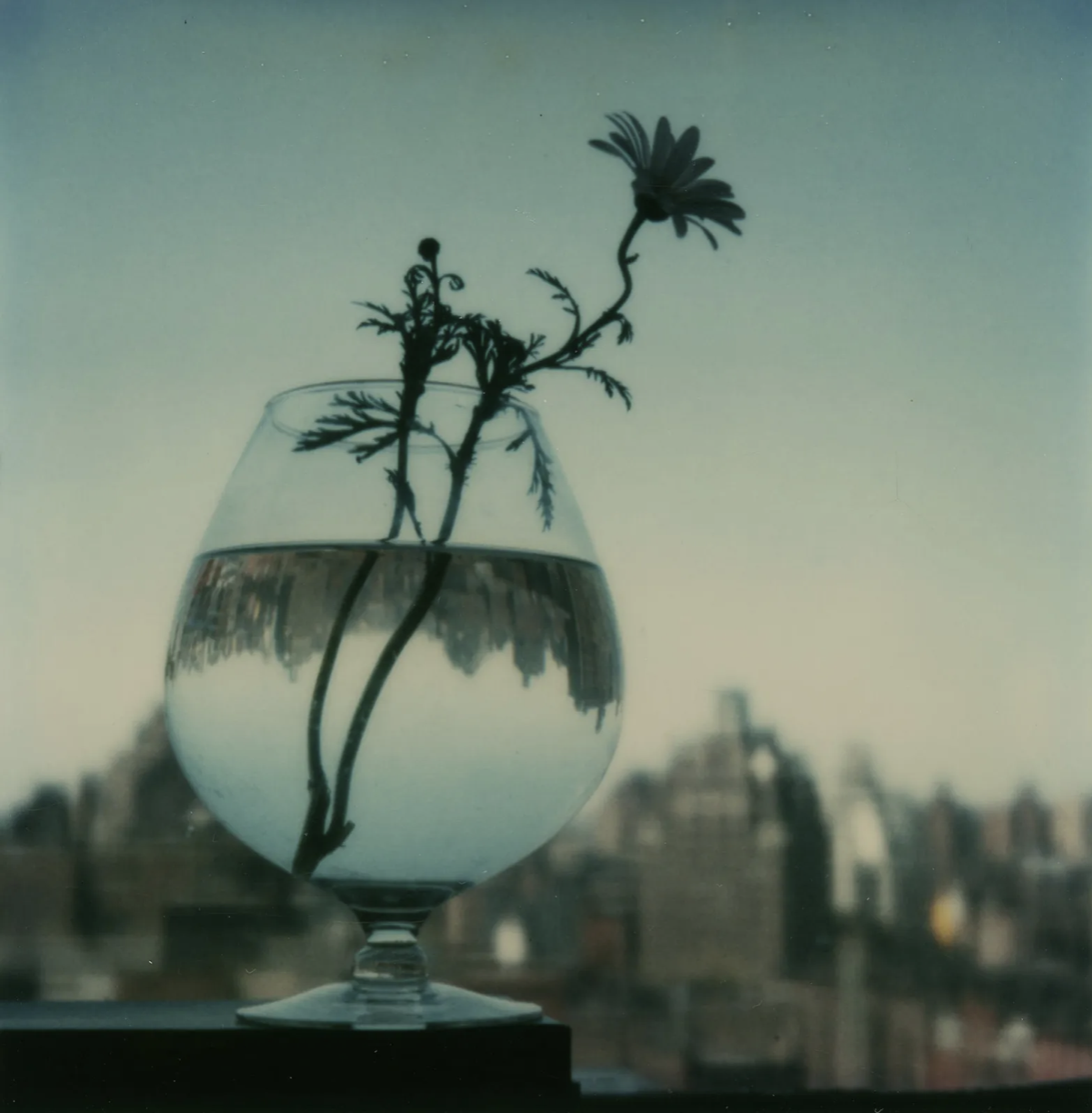
André Kertész, from the series From My Window, 1979.
There is a simple Polaroid of a flower in a vase on a windowsill. That is it. I have seen two other exhibitions before this, many other images, but it is this one that will stay with me.
I came to see a young talent. A friend came with me, admitting she was a little jealous that this new photographer had been given all this space. She is herself on the brink of getting into one of Europe's best galleries, she should be a fountain of joy and generosity. but the green feeling comes with it. I admire how open she is about this.
The show is good, or it is okay; it is what it is. Maybe it was needed. We walk down one floor to see a photography legend's show, and then further down, in the basement, some of the art hall's collection photographs hang together. The title, Nature Morte, reminds me that the previous director was asked to leave, suddenly, last September. I don't know why, and perhaps I don't want to.
There is a new powerhouse director now. I still think of the quadtych of Polaroids she showed in the last exhibition I saw at the institution she came from, four images installed in a square on the wall, each depicting a mouth like the gritted-teeth emoji. As I shook hands with her there, I felt my own jaw clench. The close-ups of hands and bodies had no daylight, no view of Paris; perhaps she felt they deserved more. There were too many needs in one room, and I didn't stay long.
This is what I think about when I stand in front of this 1979 Polaroid of a New York window by André Kertész. He bought his first Polaroid camera to make work combining still lifes with window views. A tribute to his wife, who died in 1977. He came to this technique in his eighties, I tell my friend. It's never too late to be discovered, or to start something new. She says she doesn't understand what I mean, and leaves for the bookshop. I linger over Kertész' love letter a little longer.
Afterimage is an ekphrastic series exploring that one image you see when you close your eyes—the one that lingers in your mind. We invite different people to reflect on an image they can't shake. The column began during our time publishing the journal Objektiv and continues today under Objektiv Press.