RUTH ANDERWALD ON ALEC SOTH
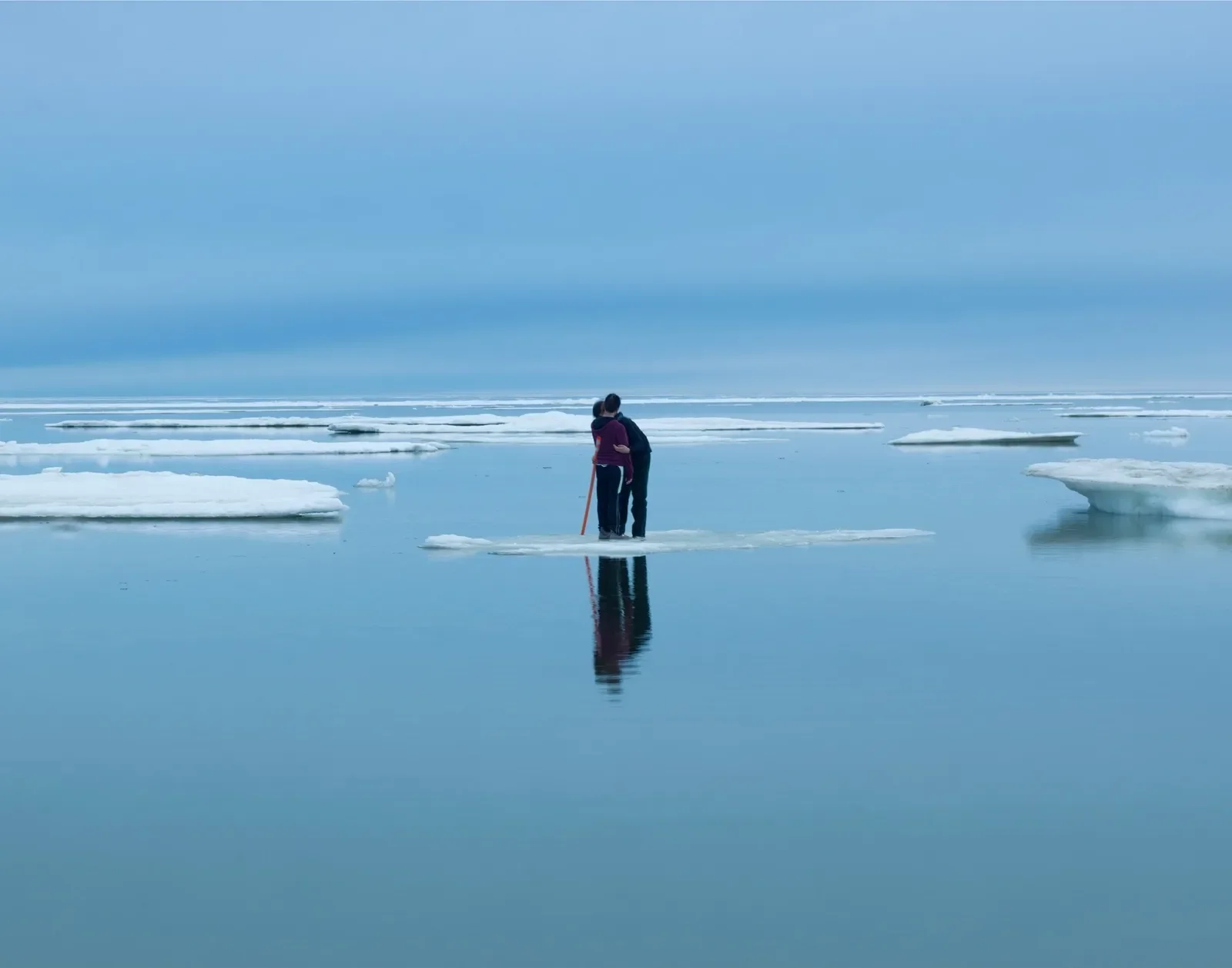
Alec Soth, A couple off of Nome's beachfront, Alaska, 2015.
Afterimage by Ruth Anderwald:
What is the image that is always at the back of my mind, on the inside of my eyelids? When thinking about this, I realised that my thinking in images puts them in relation to each other, and that my afterimage is somehow overlaid imagery. When I tried digging deeper, I realized the image that I'm yearning for is one that I have to make — my next project. It's been a really interesting self-discovery journey, this task of thinking about an afterimage.
Nevertheless, I will propose an image that exists, made by a really well-known photographer. It is Alec Soth's A Couple off Nome's Beachfront, Alaska, from 2015. You see a couple standing on a small piece of ice; one of them has crutches, and they hug each other. There is only this — the ice, the couple, and the blue sea.
There are several elements that I connect to in this image. One is that, with all the problems that we have in the world right now, constantly on our minds whenever we open (or don't open) the newspapers, we are perpetually aware of a certain level of pressure that exists. And the way I think about it, and the way I connect this image to it, is that we only have each other as humanity. This is it. We have only us, and we need to connect with each other. That's our only way of managing, of moving on, of creating. Connected to that is a kind of wonderment: how have we survived as humanity for so long without creating a sustainable way of coexisting? I mean, how did we even manage to end up here? It's crazy. I see a lot of these things in that couple on the ice sheet, also in connection with climate change.
And then I think what stands out is that this is a part of Alaska that was part of the gold rush of the early 20th century, taken away from Indigenous people — erasing their culture and values, or at least trying to. So, a lot of things come together in this image.
My thinking has revolved a lot around coexistence lately, and what art and artistic thinking can teach us — also artistic practice and photographic practice. There are performative aspects to photography. One is the bodily presence of the photographer and the subjects: how their presence is impressed upon the photographer and vice versa. The presence of a camera changes the setting and allows for different things to emerge. And then, of course, photography makes things visible and is therefore used a lot in activism, making visible things that would otherwise remain hidden. I think there is a lot in the medium of photography, but also in the way that we as artists manage to survive — building relationships, grasping opportunities, and trying to build up not only careers for ourselves, because this wouldn't work alone; we also create networks to sustain each other and deal with things together.
This is the performativity that art has. It can nudge you to think differently, to engage, to act. In Austria, the climate of discussion is so heated right now that even people who agree on a lot of things don't talk to each other anymore. I think we should have more burning questions to raise and more pressing challenges to address than to stop speaking to a person because they might see certain things differently. It's so strange. Each other is all we have.
Afterimage is an ekphrastic series exploring that one image you see when you close your eyes—the one that lingers in your mind. We invite different people to reflect on an image they can't shake. The column began during our time publishing the journal Objektiv and continues today under Objektiv Press.